
COMMODITIES
In Vietnam, sectors such as timber, rubber, coffee, cassava, and cashew are considered to carry a risk of contributing to deforestation. This website provides up-to-date information on the production and trade of these commodities, and serves as a platform for dialogue on the importance of legal, efficient, and sustainable management and use of land and forest resources.
COFFEE
The coffee sector is one of the most important industries within Vietnam's agricultural economy. As of 2024, Vietnam is the world's second-largest coffee producer — after Brazil — accounting for 19% of global supply. Smallholder farmers play a critical role at the upstream end of the supply chain, contributing approximately 95% of the sector's total output.
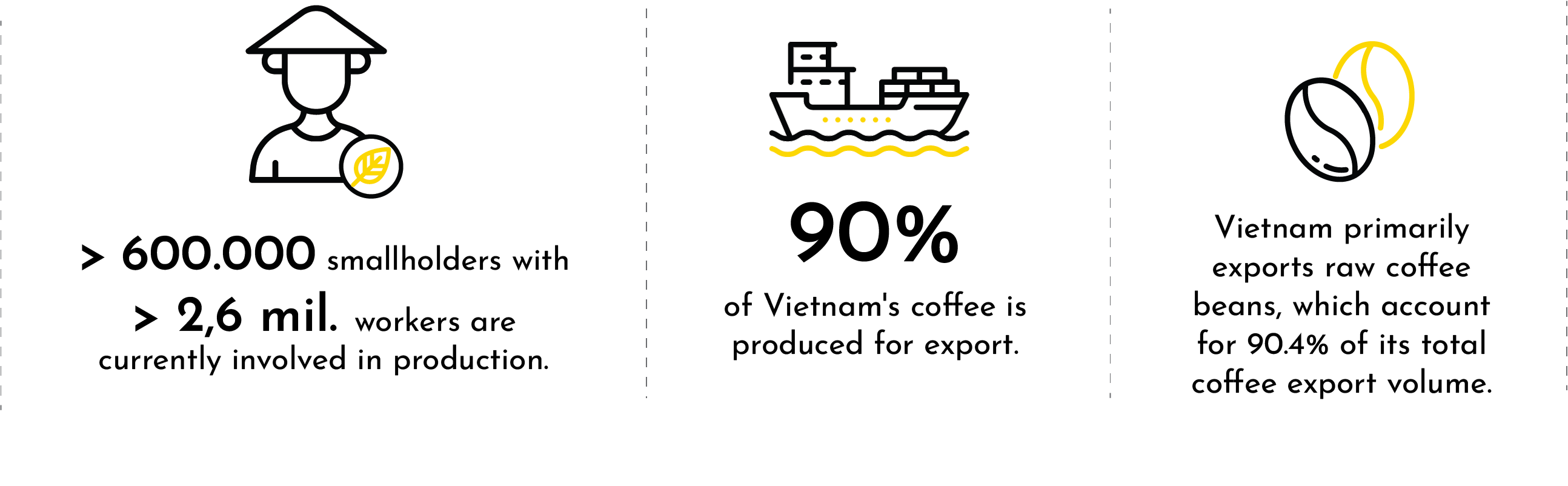
Despite its impressive achievements, Vietnam's coffee sector faces numerous challenges. These include a large area of ageing coffee plantations in need of replanting, a relatively low proportion of land certified as sustainable, and the widespread practice of monoculture, which creates various environmental issues. In addition, the sector is increasingly affected by the impacts of climate change.
WOOD & WOOD PRODUCTS
Vietnam currently holds a strong competitive advantage in the timber sector, with wood and wood products exported to over 160 countries and territories worldwide.
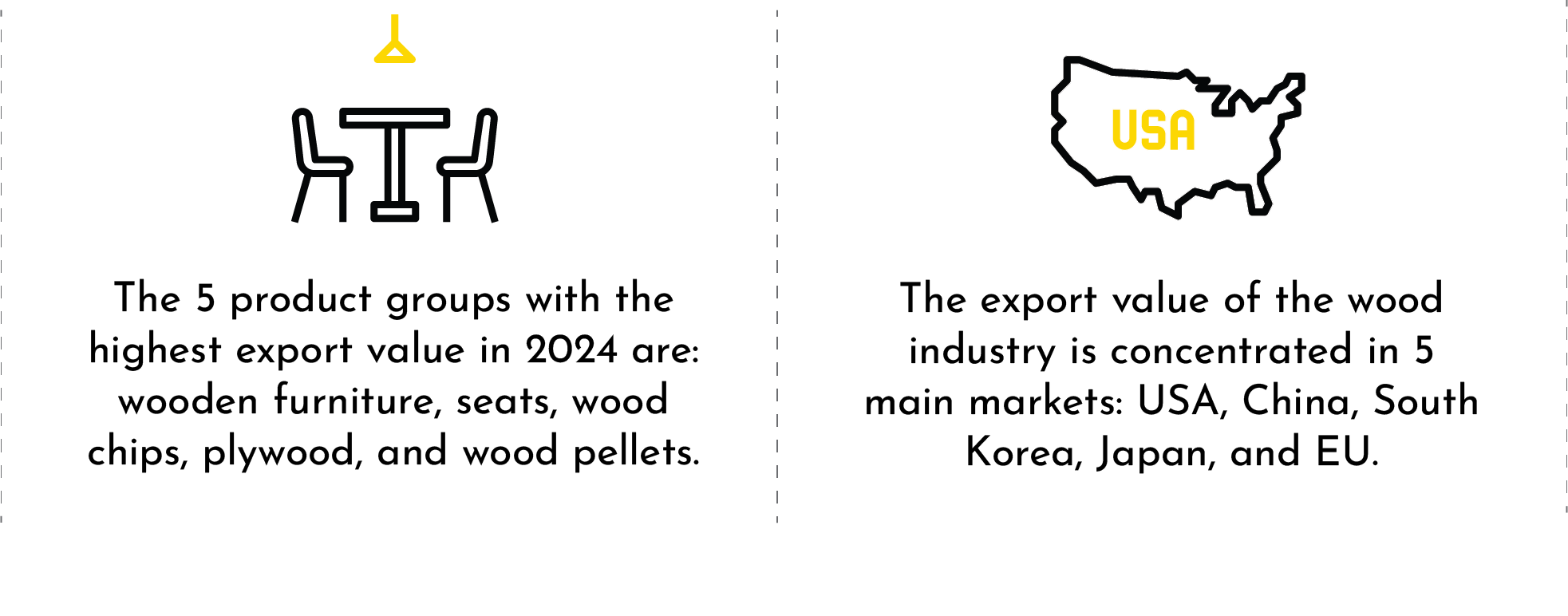
In 2024, Vietnam's timber sector recorded strong export growth compared to 2023; however, it has not yet returned to the export levels achieved in 2022, due to a range of challenges. These include the prolonged Russia–Ukraine conflict and the conflict in the Middle East, both of which have disrupted global supply chains; high sea freight rates and extended shipping times resulting from rerouting away from the Red Sea; the introduction of new sector-specific regulations in key markets (such as the EUDR, the Lacey Act, and ESG compliance requirements); and policy shifts following recent U.S. elections. Additionally, the sector has been impacted by two trade defense investigations initiated by the U.S. Department of Commerce (DOC) concerning plywood and kitchen cabinets.
RUBBER
The rubber production and processing industry is one of Vietnam's most important export sectors. As of 2024, the total rubber cultivation area nationwide reached nearly 910 thousand hectares, managed by both household farmers (smallholder rubber plantations) and enterprises. The area under smallholder cultivation has steadily increased over the years and officially surpassed that of large-scale plantations in 2017.
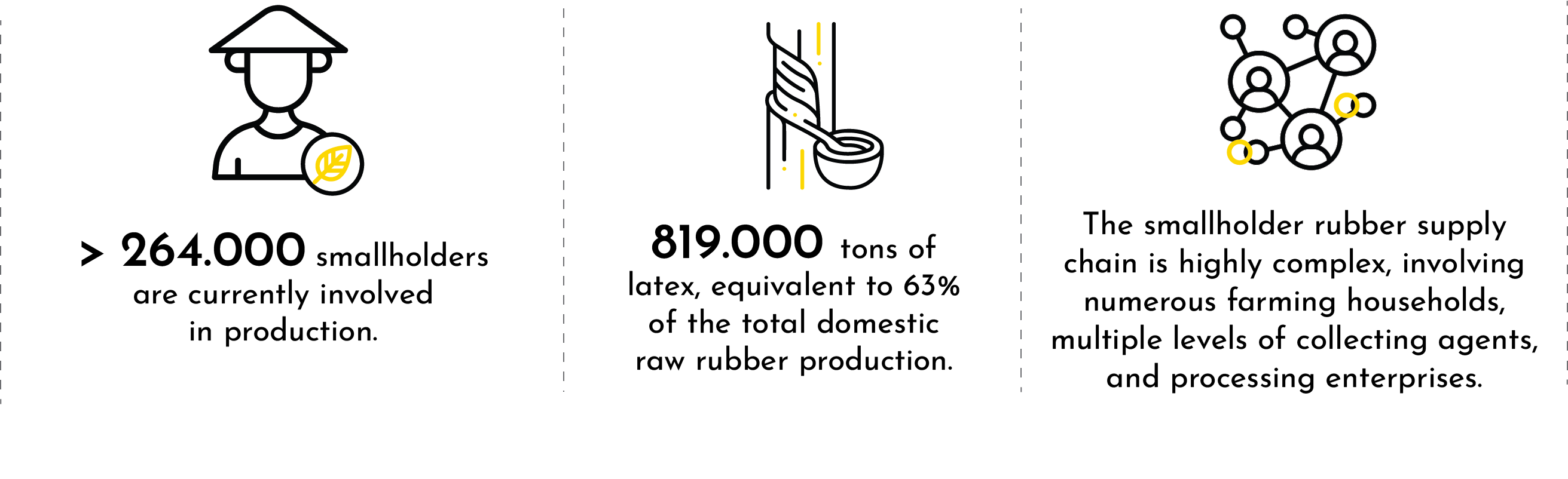
Vietnam's smallholder rubber supply chain continues to face several major challenges. These include the lack of a comprehensive traceability system across the entire chain; the absence of baseline data on the geographic coordinates and boundaries of cultivated plots; and gaps in information and transaction records between different stages of the chain — particularly between smallholders and collecting agents, as well as among the agents themselves.