| Cover | Title & Author | Summary | Year | Field | Download |
|---|---|---|---|---|---|
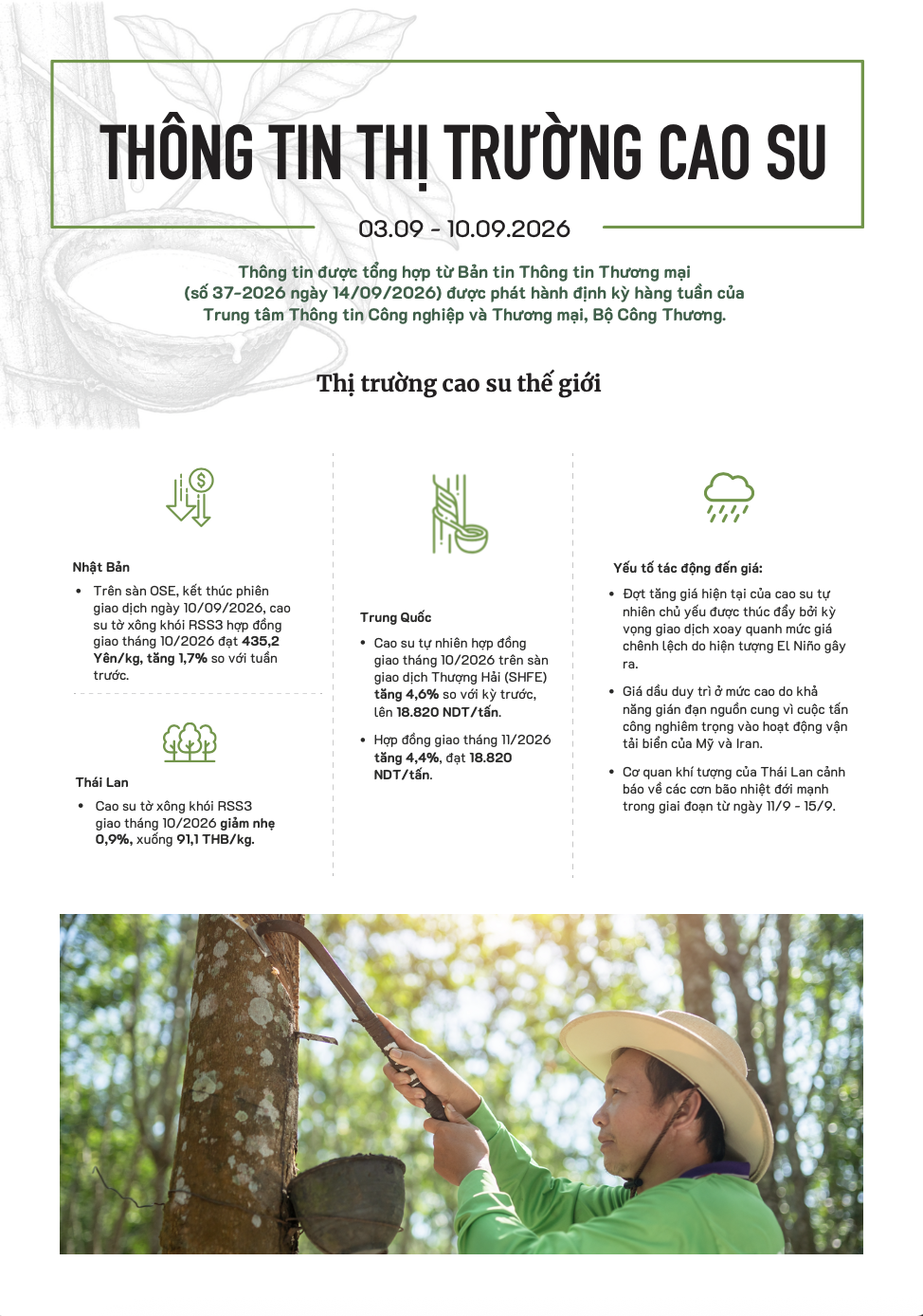 | Rubber Market Bulletin (03-10/09/2026) Industry and Trade Information Center, Ministry of Industry and Trade | From September 3–10, 2026, global rubber prices showed mixed movements, rising in Japan and China but edging down in Thailand, amid market expectations related to El Niño, high oil prices, and adverse weather risks. In China, Vietnam remained the second-largest rubber supplier, accounting for 11.7% of the country’s total imports. However, in the first eight months of 2026, Vietnam’s rubber exports to China fell by 30.1% in volume and 20.8% in value year-on-year, while the average export price rose by 13.3% to USD 1,986 per tonne. | 2026 | Rubber | |
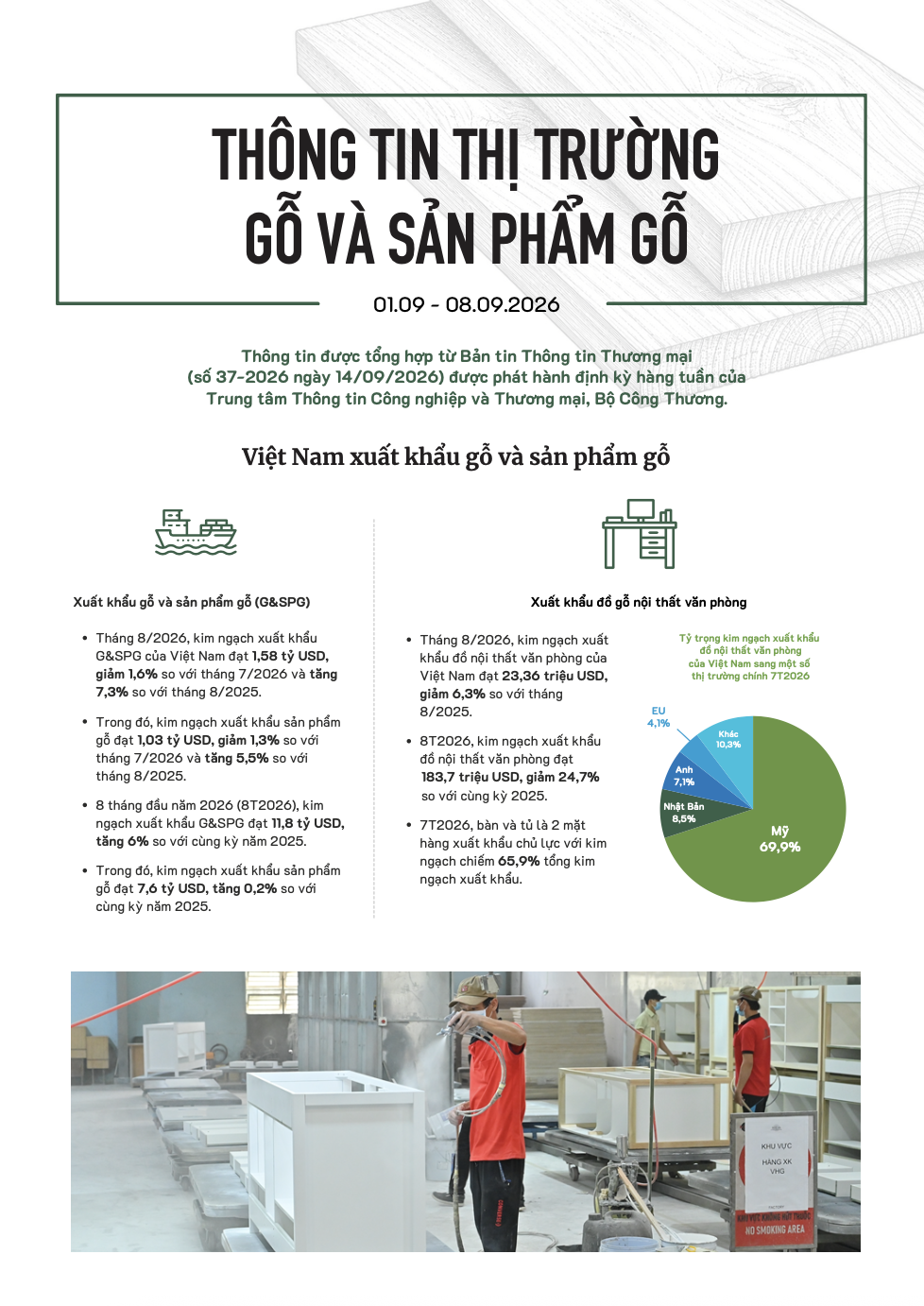 | Wood and Wood Product Market Bulletin (1-18/09/2026) Industry and Trade Information Center, Ministry of Industry and Trade | In the first eight months of 2026, Vietnam’s exports of wood and wood products reached USD 11.8 billion, up 6% year-on-year. Exports to Japan alone totaled USD 1.48 billion, up 5.3%, with wood pellets remaining the largest export item at USD 534.5 million. On the import side, Vietnam’s imports of raw wood during September 1–8, 2026 were valued at USD 88 million, down 3.7% from the previous week. In the first seven months of 2026, oak imports reached 397,400 m³ worth USD 238.4 million, up 30.4% in volume and 39.3% in value year-on-year, with the United States remaining the largest supplier. | 2026 | Wood | |
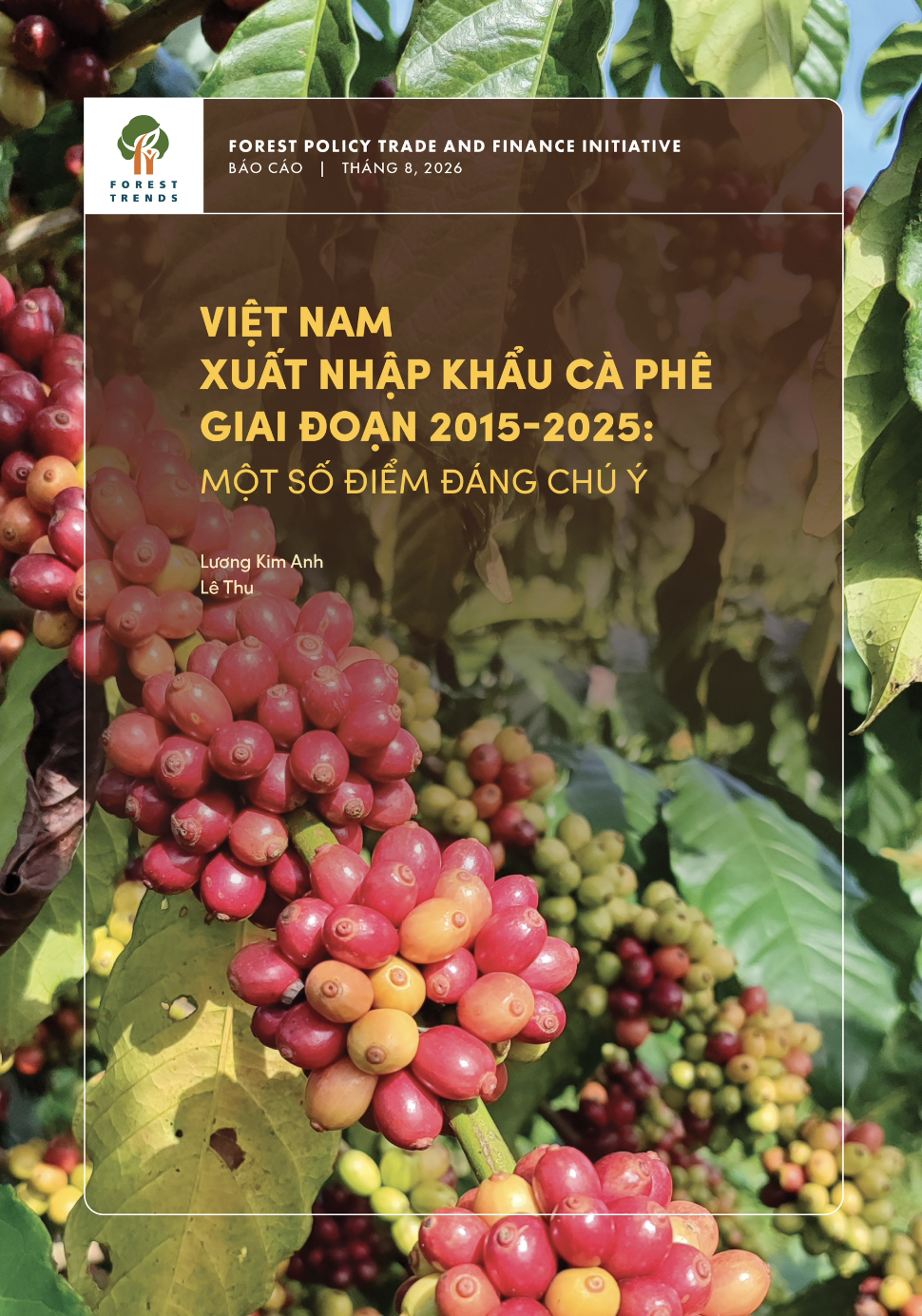 | Vietnam's coffee exports and imports 2015-2025: Key highlights Lương Kim Anh, Lê Thu | During 2015–2025, Vietnam maintained its position as the world’s second-largest coffee exporter, shipping a total of 15.8 million tonnes of coffee products worth USD 41.6 billion. This made coffee one of Vietnam’s three leading agricultural and forestry export commodities. | 2026 | Coffee | |
 | Vietnam is a major exporter of wood products, yet its domestic market still faces challenges related to product quality, legal sourcing, traceability, and standards. Using outdated school furniture in public schools as an example, the report proposes a public procurement policy that prioritizes quality, health and safety, domestically grown plantation timber, and material reuse. Such a policy could promote large-diameter timber plantations, strengthen the domestic market, reduce reliance on high-risk imported timber, and enhance the position of Vietnam’s wood industry. | 2026 | Wood | ||
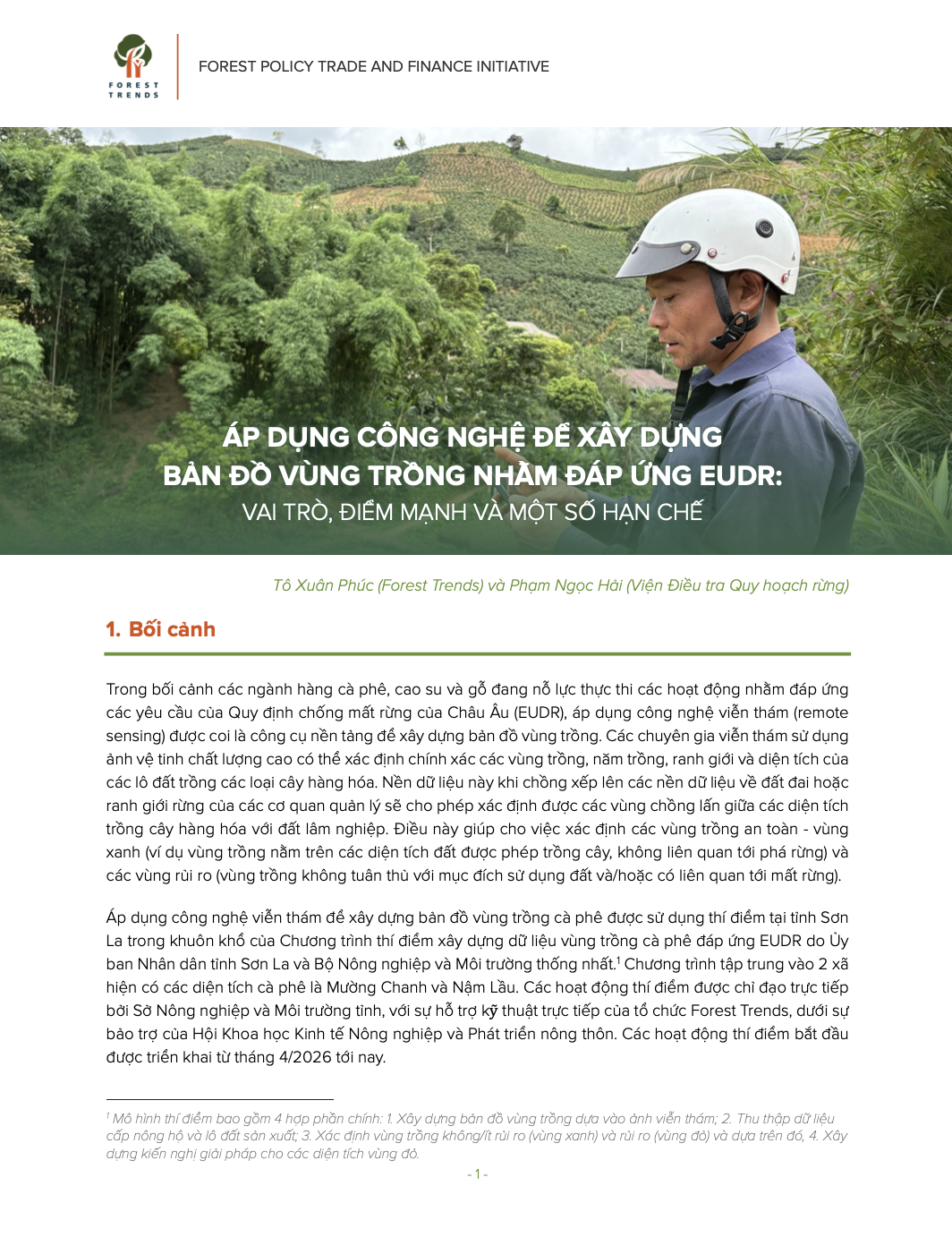 | Remote sensing technology can rapidly and accurately identify the location, area, and establishment time of production areas, while also detecting risk areas by overlaying production maps with forest maps. However, its effectiveness depends on image quality, technical capacity, and field verification. To fully comply with EUDR, field data collection is still needed to identify individual farmers and the boundaries of each production plot. | 2026 | Production data | ||
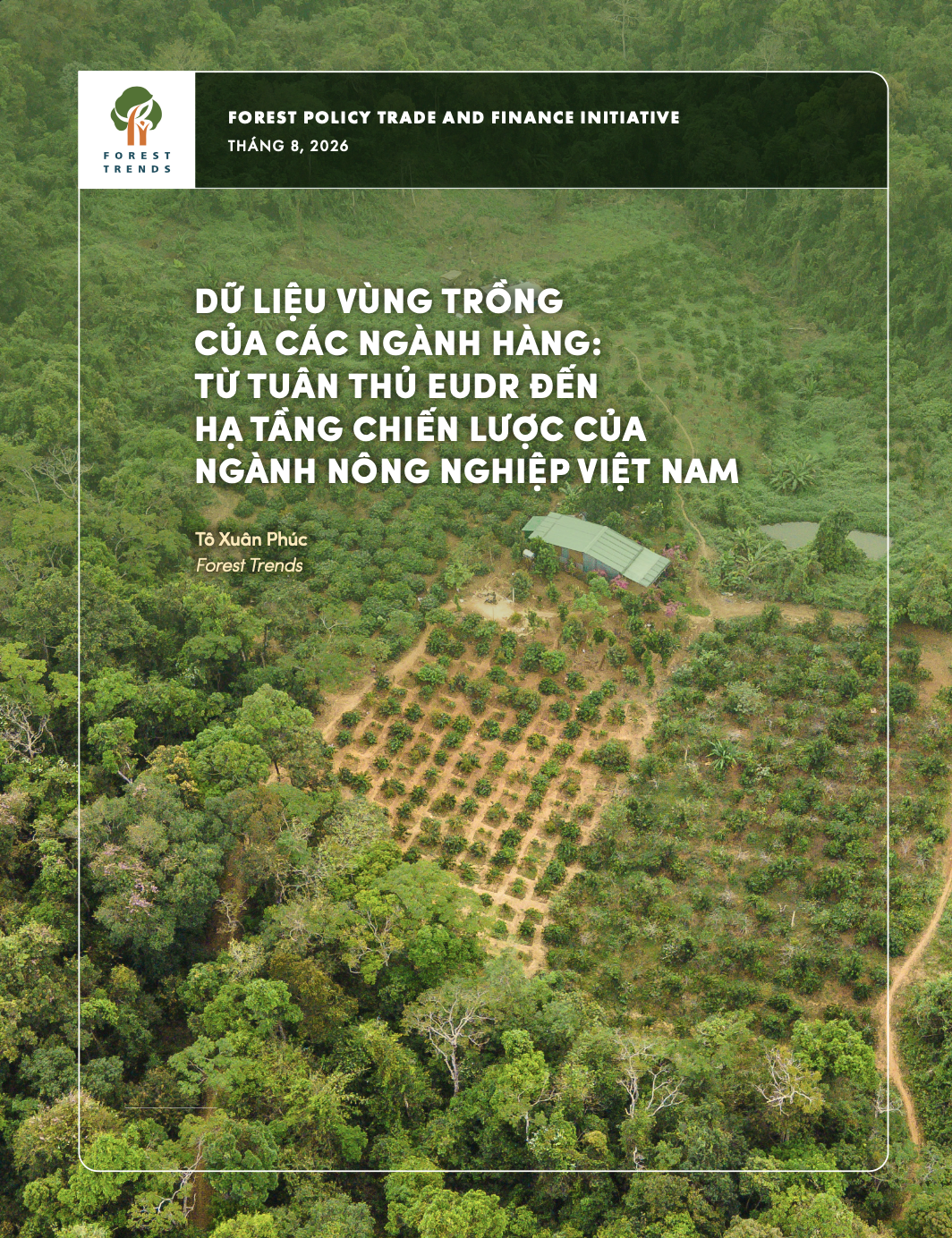 | Vietnam does not lack production area data, but existing data remain fragmented, inconsistent, and poorly interconnected among government agencies, businesses, and different levels of administration, resulting in wasted resources and increased supply chain risks. The report argues that production area data should not be used solely to meet requirements such as the EUDR, but should become shared data infrastructure for the agricultural sector. A standardized platform that enables data updating, sharing, connectivity, traceability, and protection would serve as strategic infrastructure, benefiting farmers, businesses, and the Government. | 2026 | Production data | ||
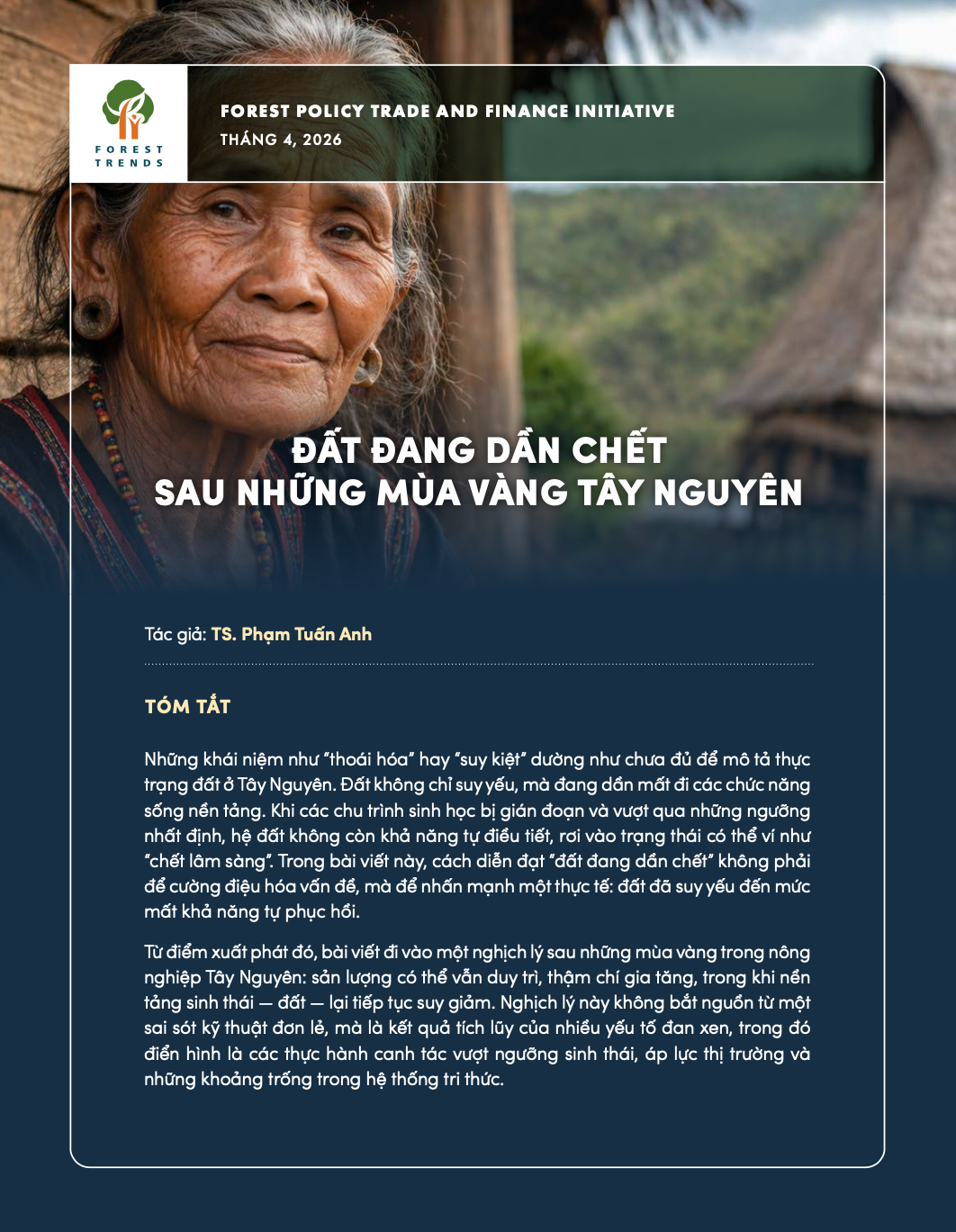 | The article explores a paradox in the Central Highlands’ agriculture: crop yields may continue to rise while the ecological foundation — the soil itself — keeps degrading under pressure from intensive farming, market demands and fragmented knowledge systems. Soil restoration is not only a technical challenge, but a systemic transformation built around four pillars: measuring soil health, reshaping economic incentives, turning knowledge into community practice, and redesigning long-term agricultural systems. | 2026 | Other | ||
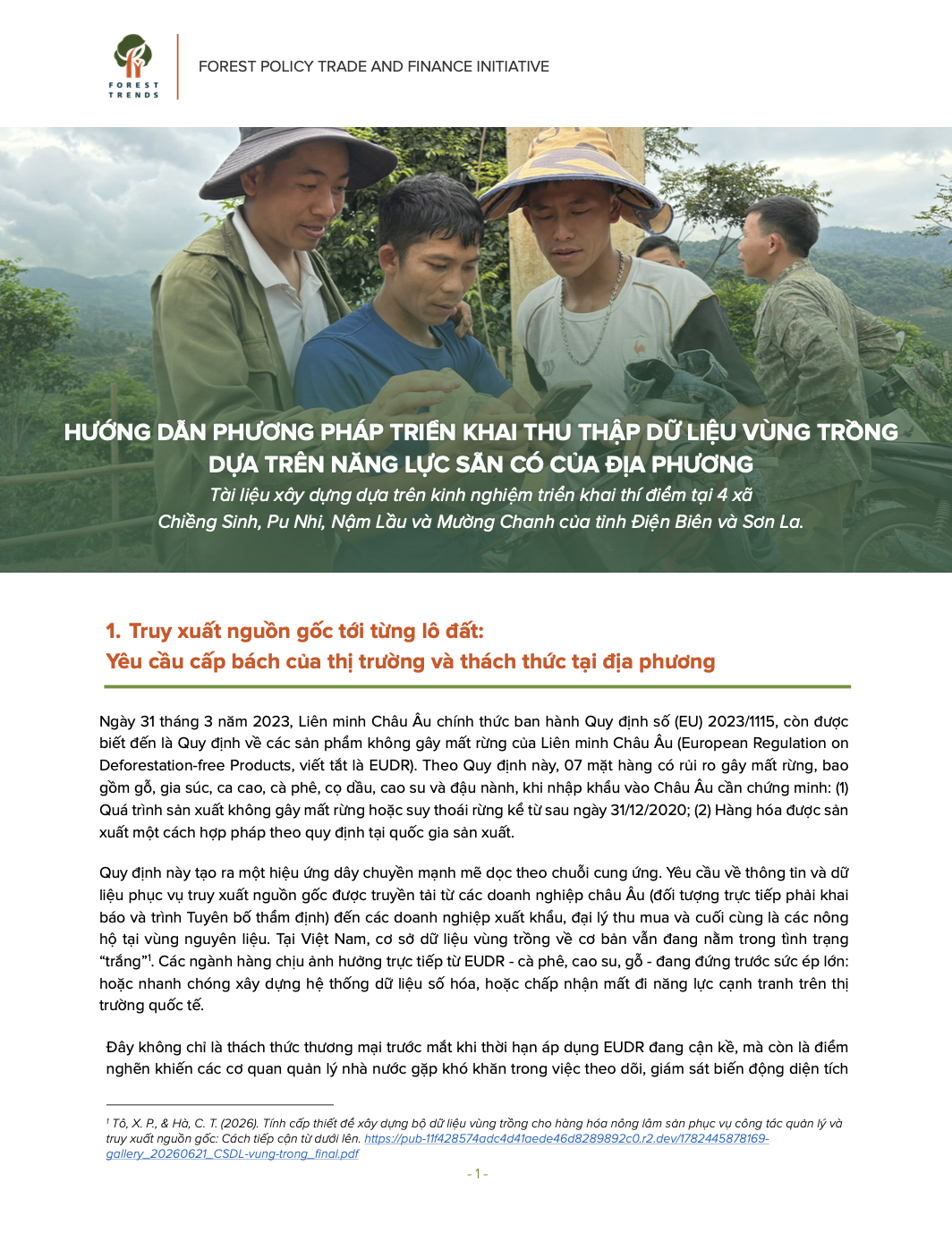 | The document presents a method for collecting and building production area datasets using existing local resources, following a three-stage model from training trainers and providing hands-on training at commune and village levels to scaling up across the locality, based on pilot experience in four communes in Dien Bien and Son La provinces. The results show that a community-based approach can enable local authorities to rapidly develop data for traceability and EUDR compliance at a reasonable cost, while strengthening the capacity of local authorities, farmers, and communities to manage, update, and take ownership of production area data. | 2026 | Production data | ||
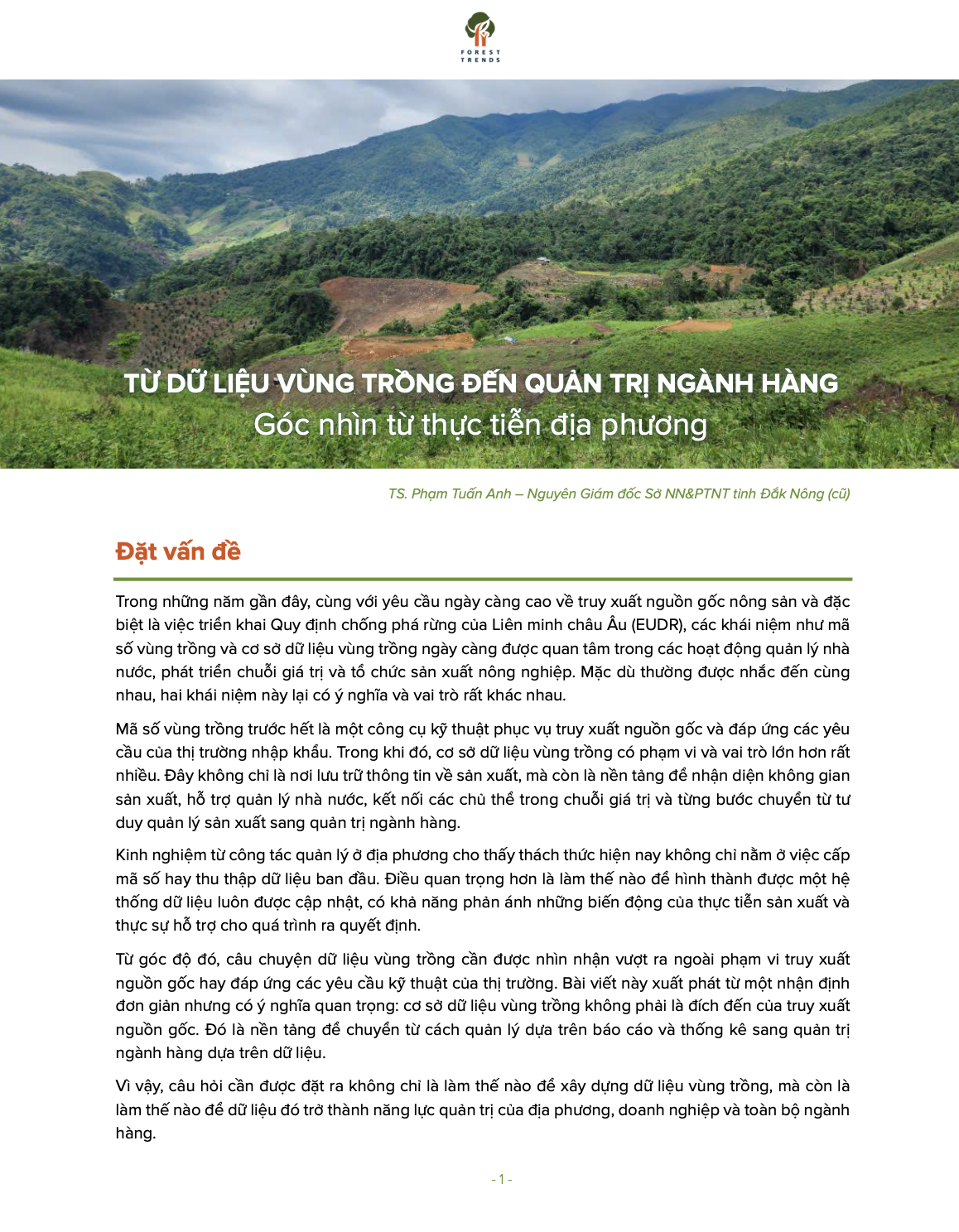 | The report distinguishes production unit codes from production area datasets, emphasizing that such data should go beyond traceability and EUDR compliance to become an integrated, regularly updated foundation for decision-making and a gradual shift from production management to data-driven commodity sector governance. Drawing on practical experience from Dak Nong, the author advocates a bottom-up approach that combines the State’s enabling role with the participation of farmers, cooperatives, and businesses to create a dynamic data system that reflects actual production conditions and strengthens agricultural governance. | 2026 | Production data | ||
 | The concept of the “rights of land” is proposed as a new approach to understanding the interconnected relationship between people, living soil systems, and sustainable development through a social-ecological lens. Rather than offering a predetermined framework, the paper seeks to open space for objective and responsible discussion and debate from both academic and policy perspectives. | 2026 | Other | ||
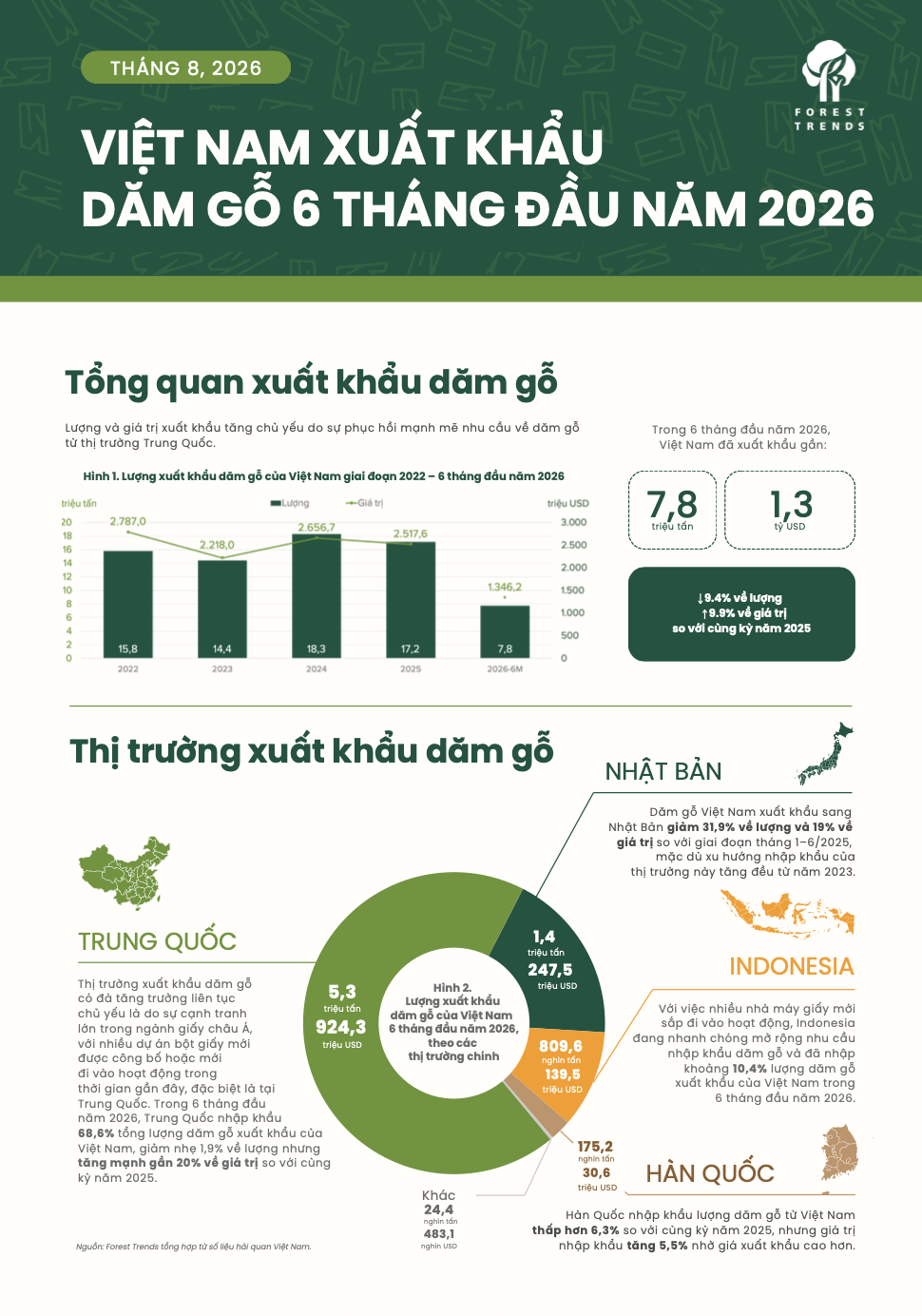 | Vietnam exports woodchip in 6M/2026 Forest Trends | In the first 6 months of 2026, Vietnam's woodchip export reached nearly 7.8 million tons, valued at approximately 1.3 billion USD, a decrease of 9.4% in volume but an increase of 9.9% in value compared to the same period in 2025. This infographic provides an overview of Vietnam's woodchip export, export prices, and data in key markets during the first half of 2026. | 2026 | Wood | |
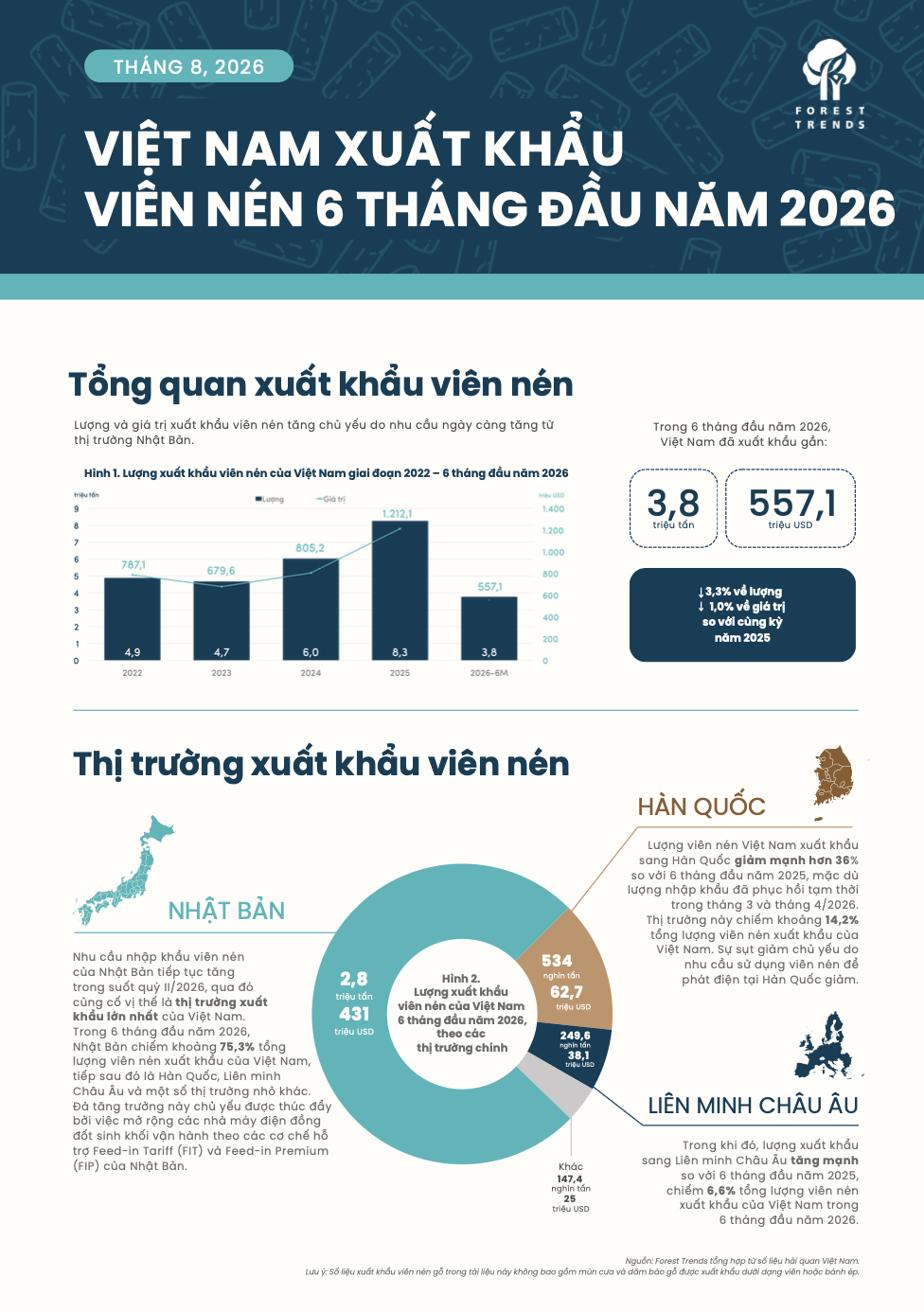 | Vietnam exports wood pellet in 6M/2026 Forest Trends | In the first 6 months of 2026, Vietnam's wood pellet export reached nearly 3.8 million tons, valued at approximately 557.1 million USD, a decrease of 3.3% in volume and 1.0% in value compared to the same period in 2025. This infographic provides an overview of Vietnam's wood pellet export, export prices, and data in key markets during the first half of 2026. | 2026 | Wood | |
 | From production area databases for traceability and management to multi-layered databases for the future To Xuan Phuc, Duong Van Thanh | This report provides an overview of the current state of production area data for agricultural and forestry commodities, highlighting data limitations that hinder traceability and demonstration of compliance with legal and market requirements. It discusses approaches to data collection, harmonization, and use, and recommends combining “top-down” and “bottom-up” approaches: central authorities establish data and technical standards, security mechanisms, and integration procedures; local authorities collect, verify, and update data; and enterprises share production area data under mechanisms that protect their legitimate interests. The Government should ensure adequate technological infrastructure, resources for data updates, verification mechanisms, and access controls. As export markets impose increasingly stringent data requirements covering products and the entire supply chain, enterprises and government agencies need to prioritize the development of multi-layered databases from now on. | 2026 | Production data | |
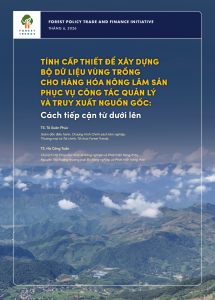 | This policy report highlights the urgent need to build an accurate, updated, and comprehensive crop production database in Vietnam to support agricultural traceability, particularly in light of international regulations like the EU Deforestation-free Regulation (EUDR) and Vietnam's domestic laws (e.g. Decree 37/2026/ND-CP and Circular 31/2026/TT-BCT). The report advocates for a bottom-up approach that utilizes local human resources, such as village officials, to collect field-level data on coffee, rubber, and timber crops. | 2026 | EUDRProduction data | ||
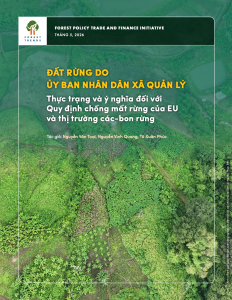 | Forest land managed by Commune People's Committees: current status and implications for EUDR and the forest carbon market Nguyen Van Toai, Nguyen Vinh Quang, To Xuan Phuc | The report assesses the current use and management of forest and forestland areas managed by commune-level People’s Committees, while examining the implications for Vietnam’s adaptation to the EUDR and forest carbon markets. It draws on statistical data, relevant studies, consultations with forestry experts and officials, and field surveys conducted in Sơn La, Phú Thọ, and Gia Lai in March–April 2026. | 2026 | CarbonEUDR | |
 | Written by Pham Tuan Anh, former director of the Đắk Nông Department of Agriculture and Environment, the handbook draws on real-world farming observations to suggest simple practices that farmers can use to begin restoring their soil. | 2026 | Other | ||
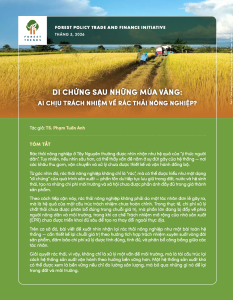 | Using agricultural waste in the Central Highlands as a case study, this policy brief examines the systemic failures in agricultural waste management in Vietnam. The author argues that rather than being a matter of individual farmer awareness, waste accumulation results from broken logistics where collection is organized but final treatment is neglected. The paper discusses how environmental costs are currently externalized to farmers and the local environment, and calls for a restructured value chain. | 2026 | Other | ||
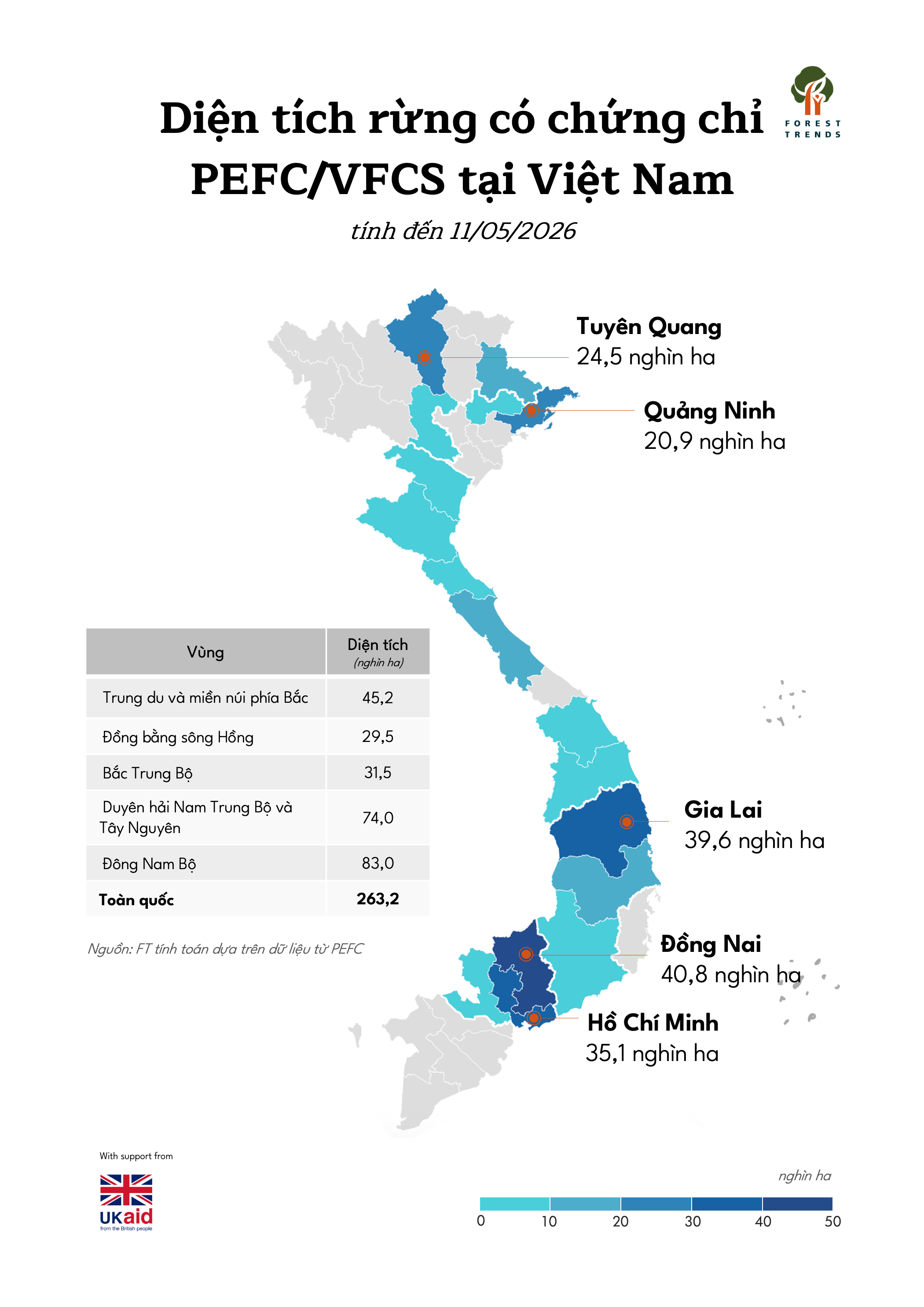 | This map details the PEFC/VFCS certified forest area in Vietnam by region and key provinces as of May 11, 2026. The total PEFC/VFCS certified forest area nationwide reached 263,200 hectares. Regionally, the Southeast leads with 83,000 ha, followed by the South Central Coast and Central Highlands (74,000 ha). Leading provinces include Đồng Nai (40,800 ha), Gia Lai (39,600 ha), and Hồ Chí Minh City (35,100 ha). | 2026 | Wood | ||
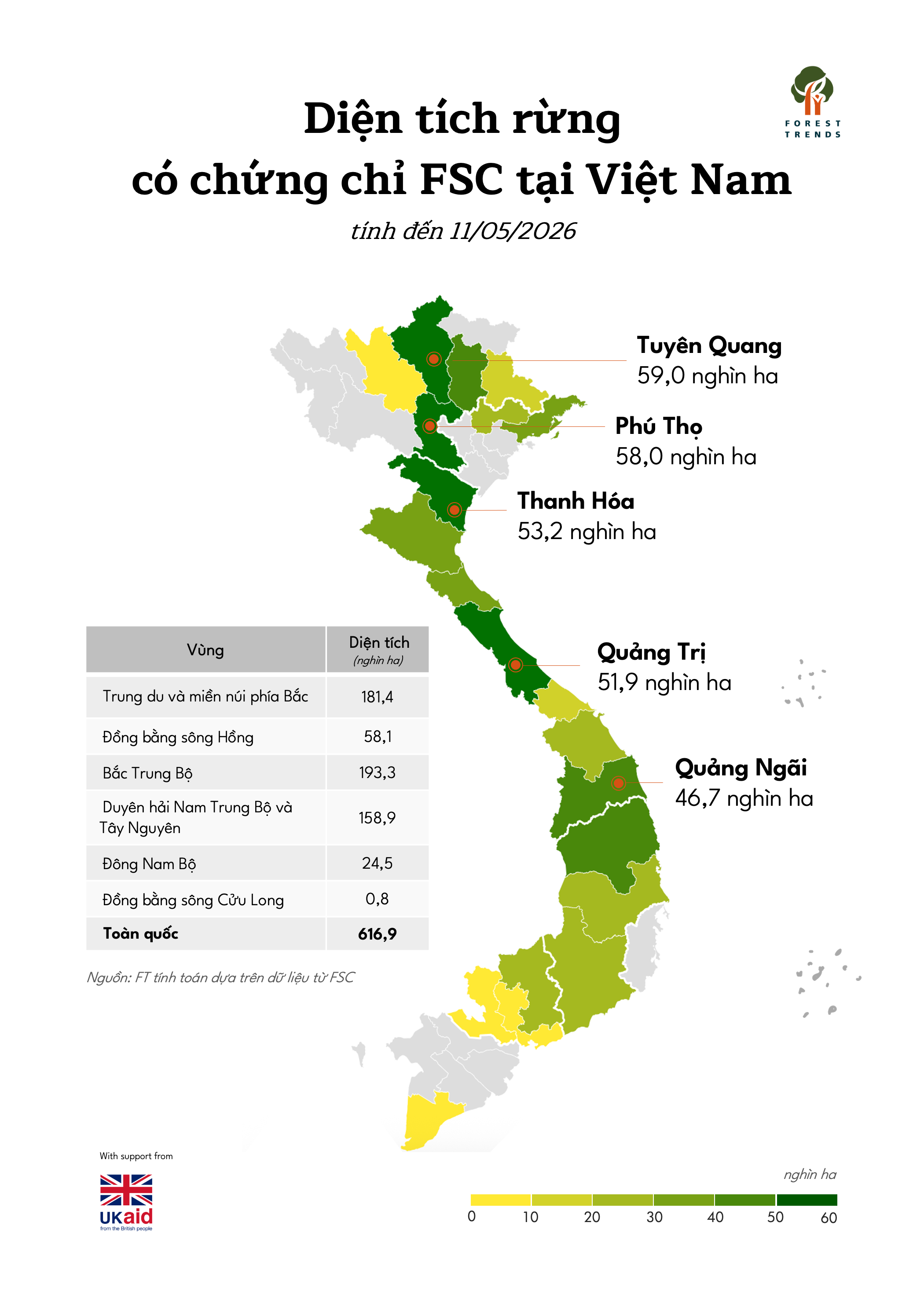 | This map details the FSC certified forest area in Vietnam by region and key provinces as of May 11, 2026. The total FSC certified forest area nationwide reached 616,900 hectares. Regionally, the North Central region leads with 193,300 ha, followed by the Midlands and Northern Mountainous region (181,400 ha). Leading provinces include Tuyên Quang (59,000 ha), Phú Thọ (58,000 ha), and Thanh Hóa (53,200 ha). | 2026 | Wood | ||
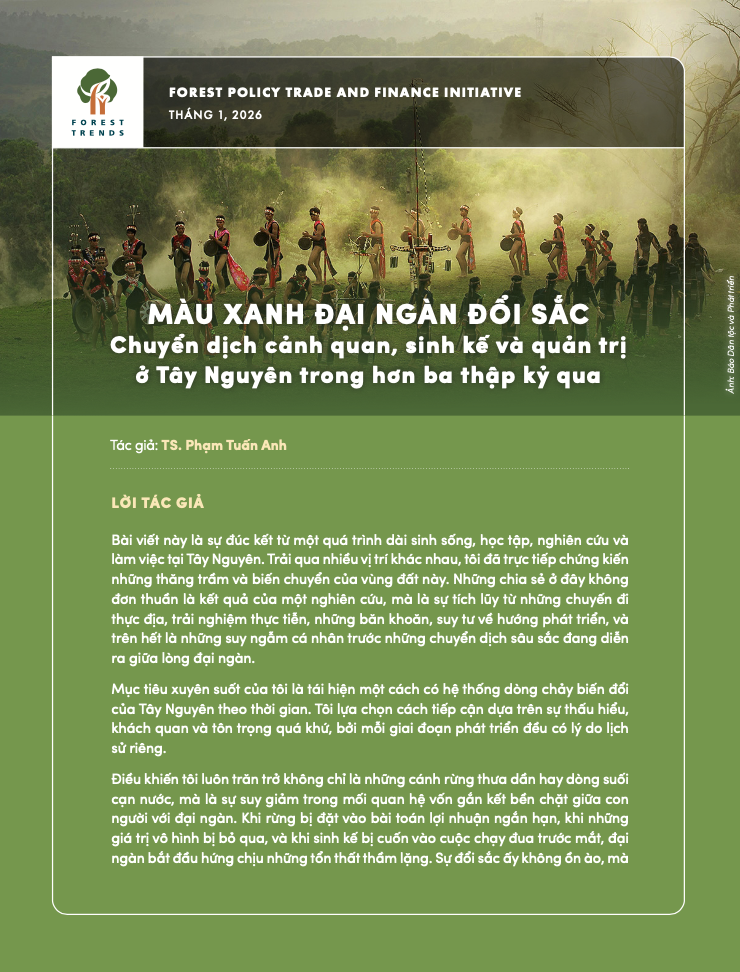 | Over the past three decades, following major transformations in the country, Vietnam’s Central Highlands have undergone profound changes. The green expanse of the great forests—long a defining identity and source of livelihoods for the region—has steadily changed, as forests have given way to vast industrial plantations, reshaping local livelihoods, people’s ways of thinking, and approaches to governance across villages and communities. These transformations call for an approach that places the relationship between people and the great forests at the center, viewing them as an inseparable living system in which forests, soil, water, and livelihoods are deeply interconnected, coexisting and interacting within a rapidly changing landscape. | 2026 | Other | ||
 | Report on the assessment of crop production database tools for EUDR complication Pham Ngoc Hai, Nguyen Trong Cuong, Trieu Bao Ngoc | The report assesses eight technology-based tools for collecting production area data to support traceability and EUDR compliance in Vietnam, comparing their functionality, usability, data security, integration capacity, and deployment costs. While all eight tools have strengths and limitations, Open Foris Ground, QField, and KoboCollect show particular potential for rapid, low-cost data collection where local resources are limited; however, none fully meets Vietnam’s data-safety requirements under its default configuration. | 2026 | EUDRProduction data | |
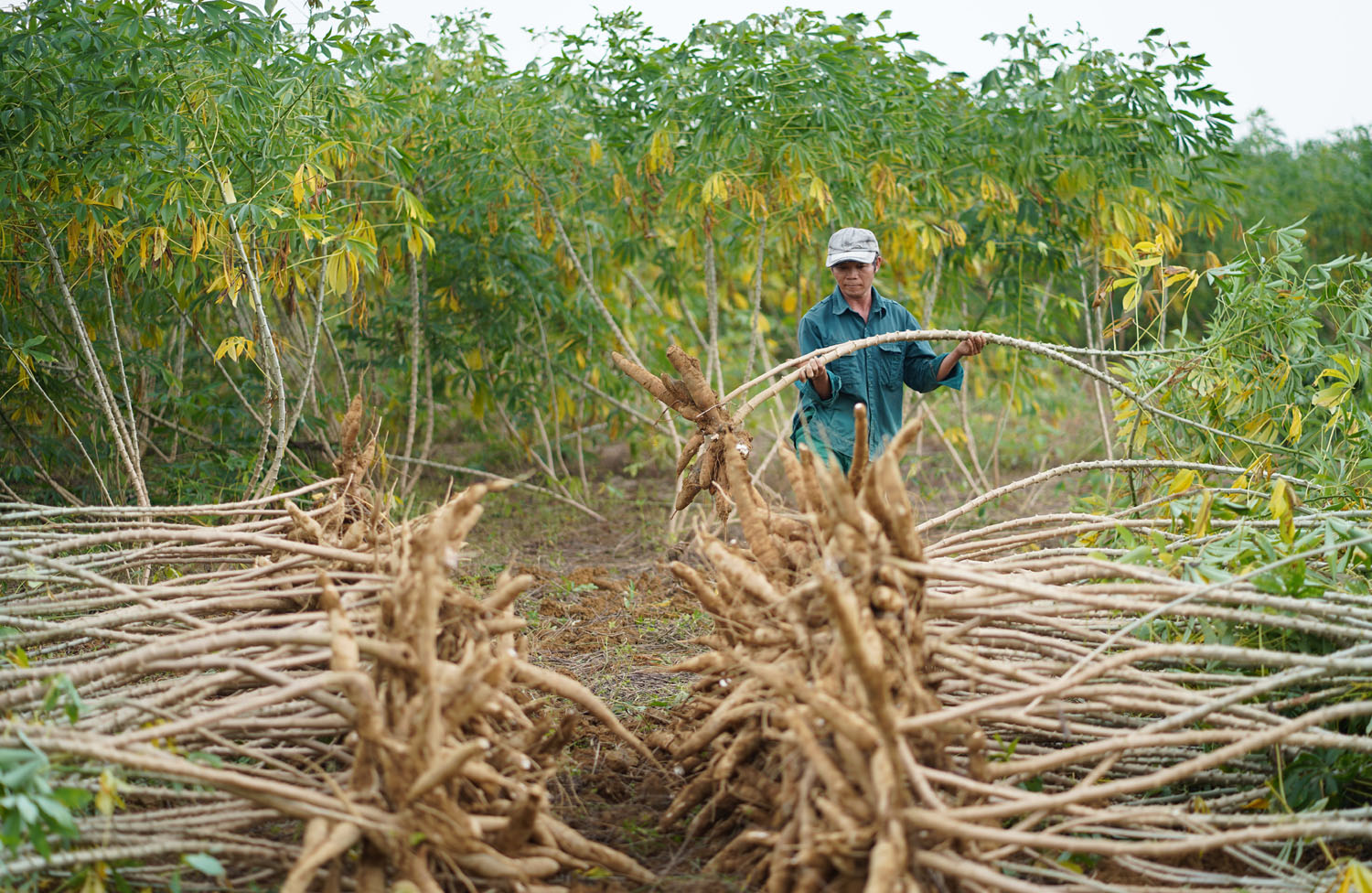 | Vietnam's Cassava Supply Chain: Current Status and Key Issues of Concern Nguyen Vinh Quang, To Xuan Phuc, Luong Kim Anh | The report highlighted the urgent need to transform Vietnam’s cassava supply chain toward full traceability, focusing on transparent and standardized information on land use and product transactions across all actors. It also called for effective risk-control mechanisms to prevent forest loss and promote sustainable land use. Achieving traceability required widespread information access and capacity building, especially for smallholders and traders. | 2026 | Other | |
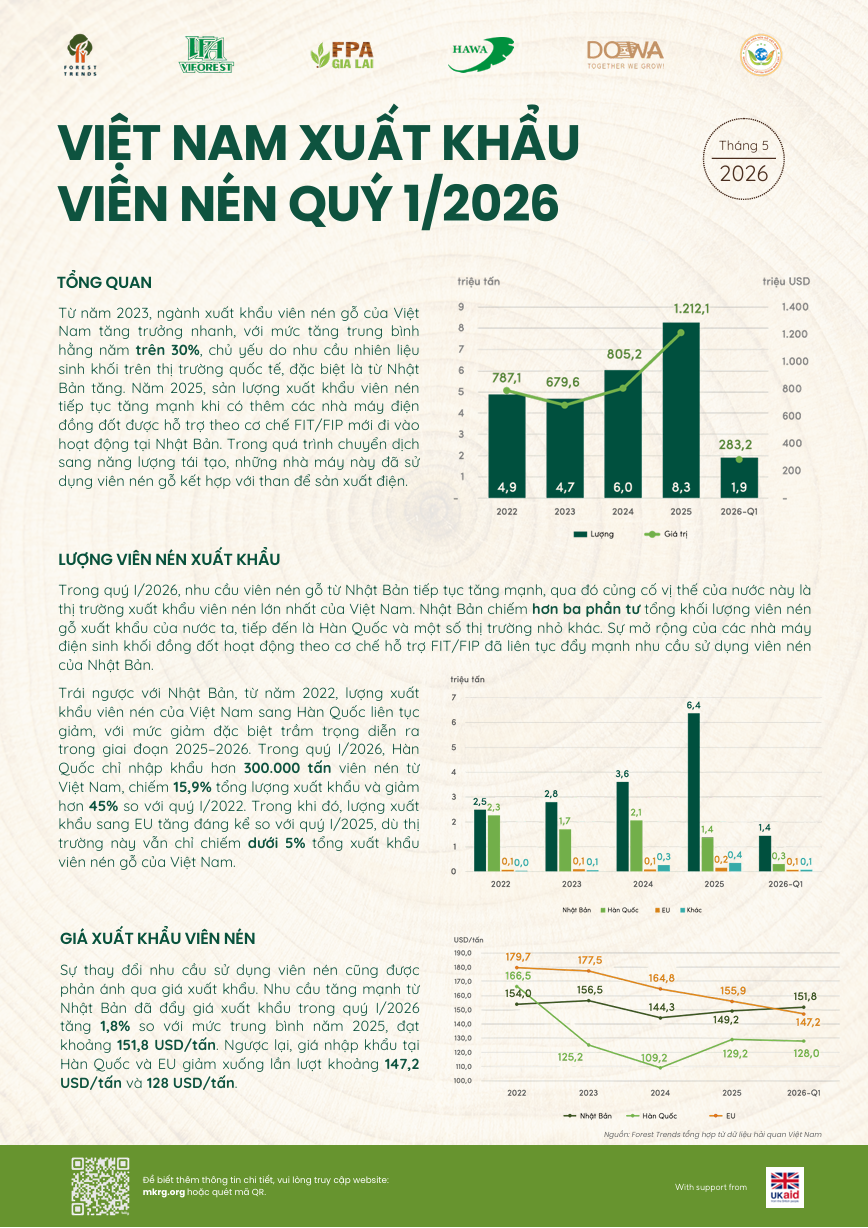 | Vietnam exports wood pellet in Q1/2026 Forest Trends | This factsheet provides an overview of Vietnam's wood pellet exports in the first quarter of 2026. Driven by demand for biomass fuel in Japan, Vietnam's wood pellet exports grew rapidly, with Japan accounting for over three-quarters of total exports. Conversely, exports to South Korea continued to decline, dropping to just over 300,000 tons in Q1/2026. The export price to Japan rose by 1.8% compared to the 2025 average, reaching $151.8 per ton. | 2026 | Wood | |
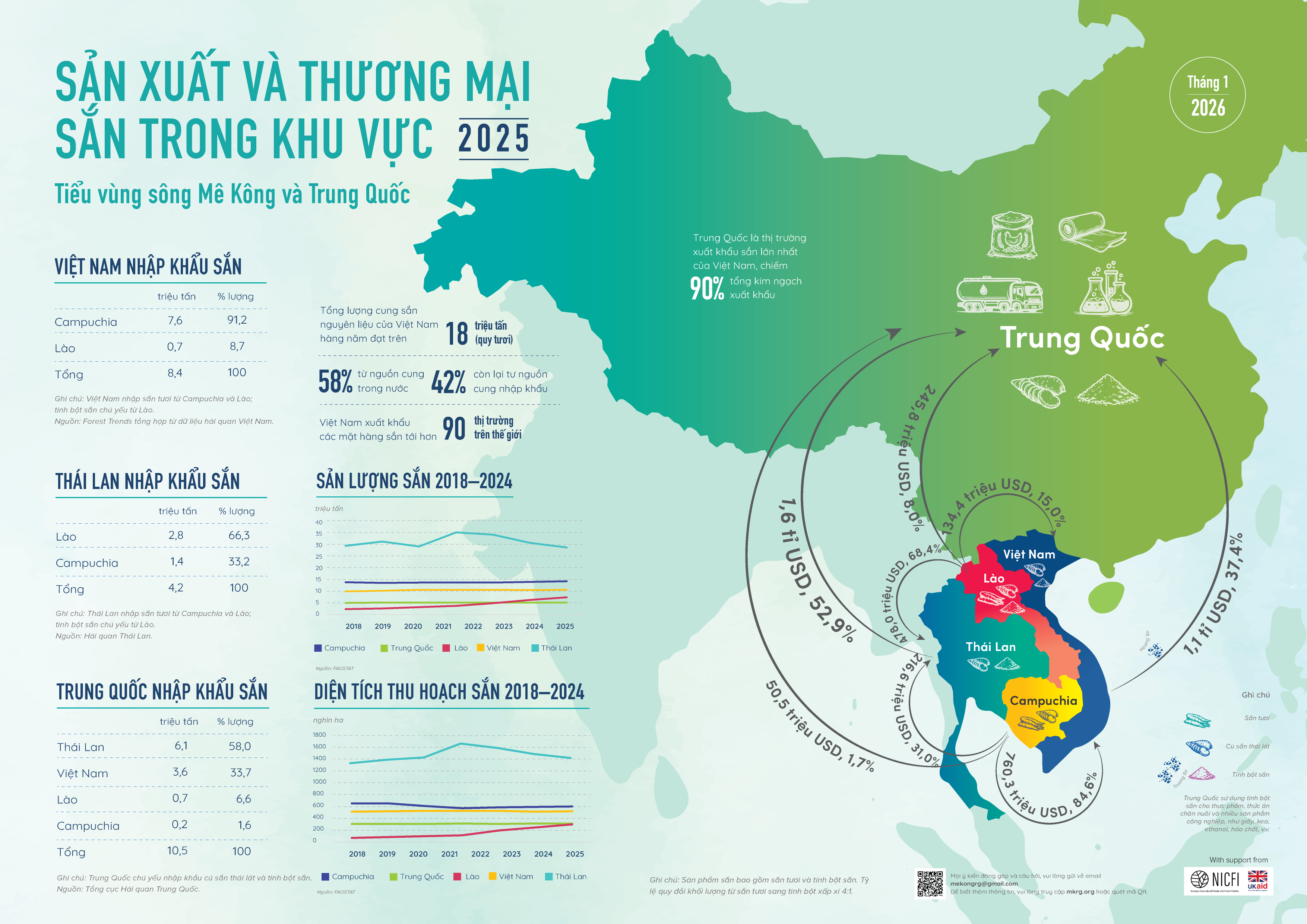 | Infographic: Regional cassava production and trade in the Mekong and China Nguyen Vinh Quang, To Xuan Phuc, Luong Kim Anh | The infographic showed the annual cassava supply chain of Vietnam in 2025. Vietnam exported cassava products to over 90 global markets—especially China, which accounted for the majority of export value. It also presented harvest area and production trends in key Mekong region countries, as well as import shares for Vietnam, Thailand, and China. | 2026 | Other | |
 | Guidelines for collecting information from smallholder rubber farmers to comply with the EUDR Nguyen Vinh Quang, Phan Tran Hong Van | — | 2025 | RubberEUDR |
Rubber Market Bulletin (03-10/09/2026)
Industry and Trade Information Center, Ministry of Industry and Trade
From September 3–10, 2026, global rubber prices showed mixed movements, rising in Japan and China but edging down in Thailand, amid market expectations related to El Niño, high oil prices, and adverse weather risks. In China, Vietnam remained the second-largest rubber supplier, accounting for 11.7% of the country’s total imports. However, in the first eight months of 2026, Vietnam’s rubber exports to China fell by 30.1% in volume and 20.8% in value year-on-year, while the average export price rose by 13.3% to USD 1,986 per tonne.
Wood and Wood Product Market Bulletin (1-18/09/2026)
Industry and Trade Information Center, Ministry of Industry and Trade
In the first eight months of 2026, Vietnam’s exports of wood and wood products reached USD 11.8 billion, up 6% year-on-year. Exports to Japan alone totaled USD 1.48 billion, up 5.3%, with wood pellets remaining the largest export item at USD 534.5 million. On the import side, Vietnam’s imports of raw wood during September 1–8, 2026 were valued at USD 88 million, down 3.7% from the previous week. In the first seven months of 2026, oak imports reached 397,400 m³ worth USD 238.4 million, up 30.4% in volume and 39.3% in value year-on-year, with the United States remaining the largest supplier.
Vietnam's coffee exports and imports 2015-2025: Key highlights
Lương Kim Anh, Lê Thu
During 2015–2025, Vietnam maintained its position as the world’s second-largest coffee exporter, shipping a total of 15.8 million tonnes of coffee products worth USD 41.6 billion. This made coffee one of Vietnam’s three leading agricultural and forestry export commodities.
From 'Outdated' Student Desks and Chairs to Public Procurement Policy for Wood Furniture: A Breakthrough Opportunity to Reshape the Domestic Wood Market and Enhance the Wood Industry Value Chain
To Xuan Phuc
Vietnam is a major exporter of wood products, yet its domestic market still faces challenges related to product quality, legal sourcing, traceability, and standards. Using outdated school furniture in public schools as an example, the report proposes a public procurement policy that prioritizes quality, health and safety, domestically grown plantation timber, and material reuse. Such a policy could promote large-diameter timber plantations, strengthen the domestic market, reduce reliance on high-risk imported timber, and enhance the position of Vietnam’s wood industry.
Applying technology to develop production area maps for EUDR compliance: roles, strengths, and key limitations
To Xuan Phuc, Pham Ngoc Hai
Remote sensing technology can rapidly and accurately identify the location, area, and establishment time of production areas, while also detecting risk areas by overlaying production maps with forest maps. However, its effectiveness depends on image quality, technical capacity, and field verification. To fully comply with EUDR, field data collection is still needed to identify individual farmers and the boundaries of each production plot.
Production area data for agricultural commodities: from EUDR compliance to strategic infrastructure for Vietnam’s agricultural sector
To Xuan Phuc
Vietnam does not lack production area data, but existing data remain fragmented, inconsistent, and poorly interconnected among government agencies, businesses, and different levels of administration, resulting in wasted resources and increased supply chain risks. The report argues that production area data should not be used solely to meet requirements such as the EUDR, but should become shared data infrastructure for the agricultural sector. A standardized platform that enables data updating, sharing, connectivity, traceability, and protection would serve as strategic infrastructure, benefiting farmers, businesses, and the Government.
The land is gradually dying after the golden harvest seasons in the Central Highlands
Tuan Anh Pham
The article explores a paradox in the Central Highlands’ agriculture: crop yields may continue to rise while the ecological foundation — the soil itself — keeps degrading under pressure from intensive farming, market demands and fragmented knowledge systems. Soil restoration is not only a technical challenge, but a systemic transformation built around four pillars: measuring soil health, reshaping economic incentives, turning knowledge into community practice, and redesigning long-term agricultural systems.
Guidance on production area data collection based on existing local capacities
Forest Trends
The document presents a method for collecting and building production area datasets using existing local resources, following a three-stage model from training trainers and providing hands-on training at commune and village levels to scaling up across the locality, based on pilot experience in four communes in Dien Bien and Son La provinces. The results show that a community-based approach can enable local authorities to rapidly develop data for traceability and EUDR compliance at a reasonable cost, while strengthening the capacity of local authorities, farmers, and communities to manage, update, and take ownership of production area data.
From production data to commodity sector governance: Lessons from local experience
Pham Tuan Anh
The report distinguishes production unit codes from production area datasets, emphasizing that such data should go beyond traceability and EUDR compliance to become an integrated, regularly updated foundation for decision-making and a gradual shift from production management to data-driven commodity sector governance. Drawing on practical experience from Dak Nong, the author advocates a bottom-up approach that combines the State’s enabling role with the participation of farmers, cooperatives, and businesses to create a dynamic data system that reflects actual production conditions and strengthens agricultural governance.
The quest for land rights: Human-centered ecological ethics in modern agriculture
Pham Tuan Anh
The concept of the “rights of land” is proposed as a new approach to understanding the interconnected relationship between people, living soil systems, and sustainable development through a social-ecological lens. Rather than offering a predetermined framework, the paper seeks to open space for objective and responsible discussion and debate from both academic and policy perspectives.
Vietnam exports woodchip in 6M/2026
Forest Trends
In the first 6 months of 2026, Vietnam's woodchip export reached nearly 7.8 million tons, valued at approximately 1.3 billion USD, a decrease of 9.4% in volume but an increase of 9.9% in value compared to the same period in 2025. This infographic provides an overview of Vietnam's woodchip export, export prices, and data in key markets during the first half of 2026.
Vietnam exports wood pellet in 6M/2026
Forest Trends
In the first 6 months of 2026, Vietnam's wood pellet export reached nearly 3.8 million tons, valued at approximately 557.1 million USD, a decrease of 3.3% in volume and 1.0% in value compared to the same period in 2025. This infographic provides an overview of Vietnam's wood pellet export, export prices, and data in key markets during the first half of 2026.
From production area databases for traceability and management to multi-layered databases for the future
To Xuan Phuc, Duong Van Thanh
This report provides an overview of the current state of production area data for agricultural and forestry commodities, highlighting data limitations that hinder traceability and demonstration of compliance with legal and market requirements. It discusses approaches to data collection, harmonization, and use, and recommends combining “top-down” and “bottom-up” approaches: central authorities establish data and technical standards, security mechanisms, and integration procedures; local authorities collect, verify, and update data; and enterprises share production area data under mechanisms that protect their legitimate interests. The Government should ensure adequate technological infrastructure, resources for data updates, verification mechanisms, and access controls. As export markets impose increasingly stringent data requirements covering products and the entire supply chain, enterprises and government agencies need to prioritize the development of multi-layered databases from now on.
The necessity of developing the crop production database for agricultural and forestry commodities to support management and traceability: a bottom-up approach
To Xuan Phuc, Ha Cong Tuan
This policy report highlights the urgent need to build an accurate, updated, and comprehensive crop production database in Vietnam to support agricultural traceability, particularly in light of international regulations like the EU Deforestation-free Regulation (EUDR) and Vietnam's domestic laws (e.g. Decree 37/2026/ND-CP and Circular 31/2026/TT-BCT). The report advocates for a bottom-up approach that utilizes local human resources, such as village officials, to collect field-level data on coffee, rubber, and timber crops.
Forest land managed by Commune People's Committees: current status and implications for EUDR and the forest carbon market
Nguyen Van Toai, Nguyen Vinh Quang, To Xuan Phuc
The report assesses the current use and management of forest and forestland areas managed by commune-level People’s Committees, while examining the implications for Vietnam’s adaptation to the EUDR and forest carbon markets. It draws on statistical data, relevant studies, consultations with forestry experts and officials, and field surveys conducted in Sơn La, Phú Thọ, and Gia Lai in March–April 2026.
Handbook on Land Restoration Practices at Household and Community Levels
Tuan Anh Pham
Written by Pham Tuan Anh, former director of the Đắk Nông Department of Agriculture and Environment, the handbook draws on real-world farming observations to suggest simple practices that farmers can use to begin restoring their soil.
The aftermath of golden harvests: who is responsible for agricultural waste?
Tuan Anh Pham
Using agricultural waste in the Central Highlands as a case study, this policy brief examines the systemic failures in agricultural waste management in Vietnam. The author argues that rather than being a matter of individual farmer awareness, waste accumulation results from broken logistics where collection is organized but final treatment is neglected. The paper discusses how environmental costs are currently externalized to farmers and the local environment, and calls for a restructured value chain.
Map of PEFC Certified Forest Area in Vietnam (as of May 11, 2026)
Forest Trends
This map details the PEFC/VFCS certified forest area in Vietnam by region and key provinces as of May 11, 2026. The total PEFC/VFCS certified forest area nationwide reached 263,200 hectares. Regionally, the Southeast leads with 83,000 ha, followed by the South Central Coast and Central Highlands (74,000 ha). Leading provinces include Đồng Nai (40,800 ha), Gia Lai (39,600 ha), and Hồ Chí Minh City (35,100 ha).
Map of FSC Certified Forest Area in Vietnam (as of May 11, 2026)
Forest Trends
This map details the FSC certified forest area in Vietnam by region and key provinces as of May 11, 2026. The total FSC certified forest area nationwide reached 616,900 hectares. Regionally, the North Central region leads with 193,300 ha, followed by the Midlands and Northern Mountainous region (181,400 ha). Leading provinces include Tuyên Quang (59,000 ha), Phú Thọ (58,000 ha), and Thanh Hóa (53,200 ha).
Shifting Shades of the Highlands: Three Decades of Change in Landscapes, Livelihoods, and Governance in Vietnam’s Central Highlands
Pham Tuan Anh
Over the past three decades, following major transformations in the country, Vietnam’s Central Highlands have undergone profound changes. The green expanse of the great forests—long a defining identity and source of livelihoods for the region—has steadily changed, as forests have given way to vast industrial plantations, reshaping local livelihoods, people’s ways of thinking, and approaches to governance across villages and communities. These transformations call for an approach that places the relationship between people and the great forests at the center, viewing them as an inseparable living system in which forests, soil, water, and livelihoods are deeply interconnected, coexisting and interacting within a rapidly changing landscape.
Report on the assessment of crop production database tools for EUDR complication
Pham Ngoc Hai, Nguyen Trong Cuong, Trieu Bao Ngoc
The report assesses eight technology-based tools for collecting production area data to support traceability and EUDR compliance in Vietnam, comparing their functionality, usability, data security, integration capacity, and deployment costs. While all eight tools have strengths and limitations, Open Foris Ground, QField, and KoboCollect show particular potential for rapid, low-cost data collection where local resources are limited; however, none fully meets Vietnam’s data-safety requirements under its default configuration.
Vietnam's Cassava Supply Chain: Current Status and Key Issues of Concern
Nguyen Vinh Quang, To Xuan Phuc, Luong Kim Anh
The report highlighted the urgent need to transform Vietnam’s cassava supply chain toward full traceability, focusing on transparent and standardized information on land use and product transactions across all actors. It also called for effective risk-control mechanisms to prevent forest loss and promote sustainable land use. Achieving traceability required widespread information access and capacity building, especially for smallholders and traders.
Vietnam exports wood pellet in Q1/2026
Forest Trends
This factsheet provides an overview of Vietnam's wood pellet exports in the first quarter of 2026. Driven by demand for biomass fuel in Japan, Vietnam's wood pellet exports grew rapidly, with Japan accounting for over three-quarters of total exports. Conversely, exports to South Korea continued to decline, dropping to just over 300,000 tons in Q1/2026. The export price to Japan rose by 1.8% compared to the 2025 average, reaching $151.8 per ton.
Infographic: Regional cassava production and trade in the Mekong and China
Nguyen Vinh Quang, To Xuan Phuc, Luong Kim Anh
The infographic showed the annual cassava supply chain of Vietnam in 2025. Vietnam exported cassava products to over 90 global markets—especially China, which accounted for the majority of export value. It also presented harvest area and production trends in key Mekong region countries, as well as import shares for Vietnam, Thailand, and China.
Guidelines for collecting information from smallholder rubber farmers to comply with the EUDR
Nguyen Vinh Quang, Phan Tran Hong Van