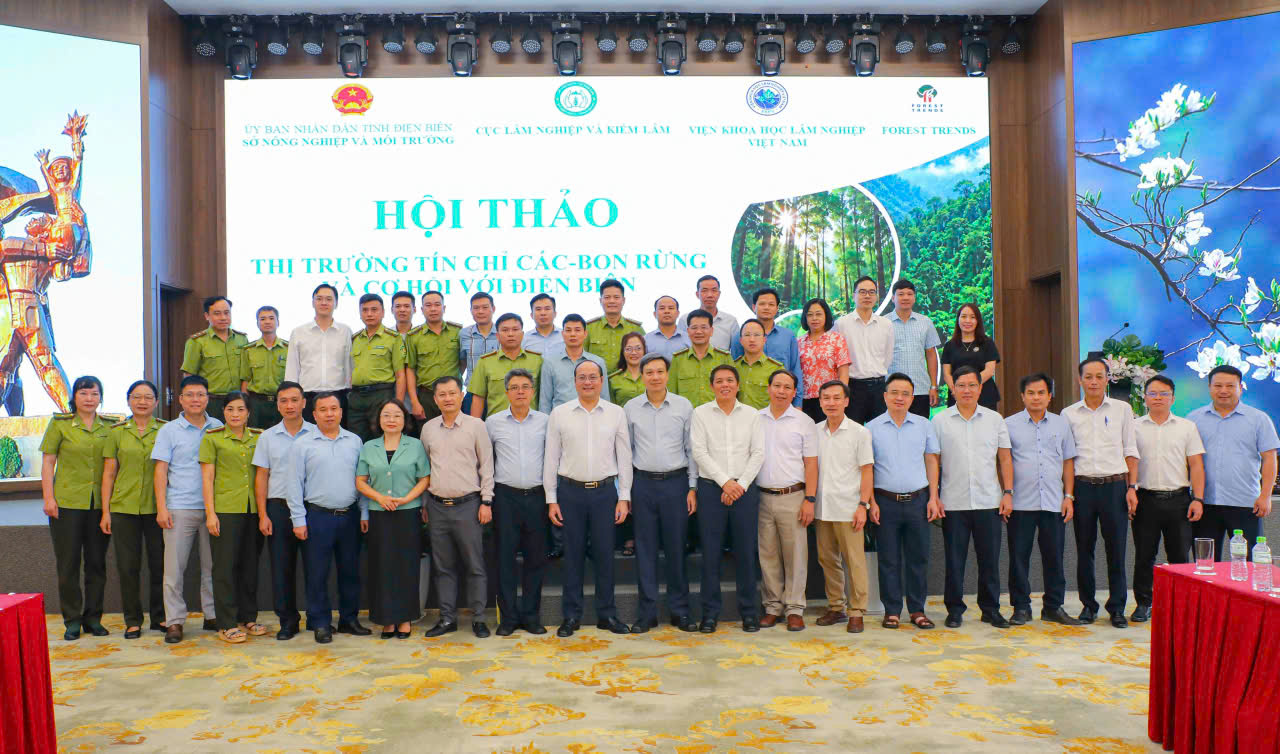
On August 8, 2026, in Dien Bien, the Dien Bien Provincial People’s Committee, Department of Forestry and Forest Protection, Vietnamese Academy of Forest Sciences, and Forest Trends jointly organized the Workshop “Forest Carbon Credit Market and Opportunities for Dien Bien”. The workshop provided information on the overall landscape of global carbon market types and their significance for Vietnam, current policy mechanisms in Vietnam governing the operation of the forest carbon market, some models of forest carbon projects currently being implemented in various localities in Vietnam, and assessments of the potential of forest carbon credits within Dien Bien province in the future.
Forests play a crucial role in climate change by absorbing and storing carbon, directly contributing to the reduction of greenhouse gas emissions. Currently, nations including Vietnam are striving to implement forest protection and development activities to combat the negative impacts of climate change.
The forest carbon credit market is considered one of the effective mechanisms to mobilize new financial resources from carbon storage and absorption services for forest protection and development. The operation of the carbon market requires new policy mechanisms that regulate market operation methods, market participants, types and quality of credits, technical aspects (carbon standards, types of carbon projects, project registration and implementation, measurement of emission reduction results, etc.). The market can only operate effectively if these regulations are clear and comprehensive.
Recognizing the potential of the forest carbon market to generate new financial resources, the Government of Vietnam has been actively implementing forest protection and development activities to participate in the carbon financial market. Lessons learned from pilot activities in various localities are summarized and integrated into the policy-making process.
To date, the government's policy mechanisms regulating the operation of the carbon market are gradually being finalized. Decree 06/2020/ND-CP (amended in 2025 by Decree 119/2025/ND-CP and in 2025 by Decree 83/2026/ND-CP in 2026) regulates the organization of the carbon market. This Decree regulates the greenhouse gas inventory for sectors and facilities required to conduct emission inventories. The Decree also sets out a roadmap for quota allocation, international exchange, preparation of a domestic carbon credit exchange, etc. Decree 29/2026/ND-CP, issued in January 2026, regulates the domestic carbon exchange, including registration, code issuance, transfer of ownership, transactions, payment for greenhouse gas emission quota transactions, carbon credits, etc.
Within the forestry sector, Decree 180/2026/ND-CP dated May 21, 2026, specifically regulates forest carbon absorption and storage services.1 Specifically, the Decree regulates the beneficiaries, payment methods, payment levels, and management of service funds, forest carbon projects, determination of greenhouse gas emission reduction results, and forest carbon credits provided.
The Decree clarifies that forest carbon absorption and storage services are activities that provide greenhouse gas emission reduction results and forest carbon credits. According to the Decree, forest greenhouse gas emission reduction results are the amount of greenhouse gas emission reductions and the amount of increased carbon absorption by forests resulting from interventions (e.g., projects) compared to the reference period.
The Decree identifies forest carbon projects as projects that generate emission reduction results and forest carbon credits from activities such as reducing deforestation and forest degradation; conservation, enhancement of carbon stocks, and sustainable forest management (REDD+); afforestation, promotion of natural regeneration; forest enrichment, natural forest nurturing; increasing productivity, extending forest rotation cycles; agroforestry and scattered trees. forest carbon projects can apply national or international carbon standards.
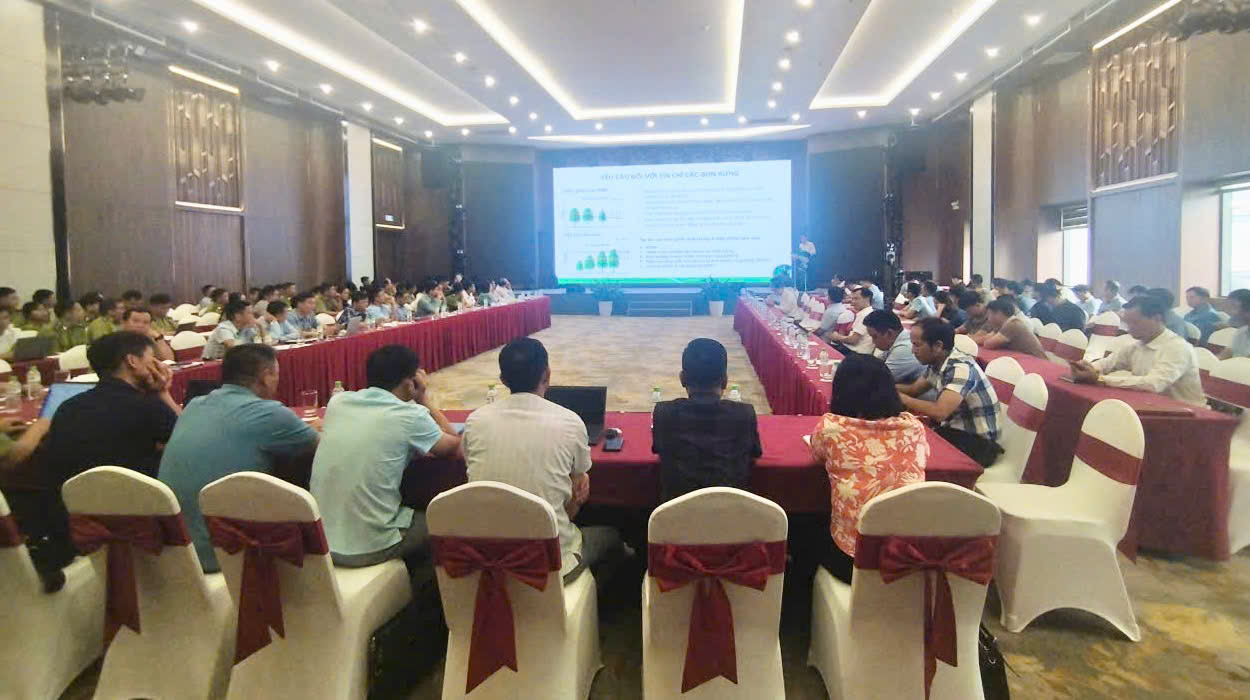
Photo 1. Overview of the workshop. Source: Forest Trends
In general, in Vietnam, the policy mechanisms shaping the operation of the carbon market, including forest carbon, have been finalized. These policy mechanisms clearly regulate the types of forest carbon projects, project development methods, registration procedures, implementation of activities, measurement of emission reduction results, and the buying and selling of results on the exchange. These policy mechanisms have established a legal framework for investing in and implementing forest carbon projects.
Besides the general overview of the market and policies, the workshop dedicated time to discuss the current status of Dien Bien's forest resources and opportunities for developing local forest carbon credits. This is important content aimed at connecting policy changes and project implementation experiences with the province's actual conditions, thereby assessing the potential to mobilize new financial resources from carbon absorption and storage services and forest carbon credits in the future.
As the legal framework for the forest carbon market in Vietnam becomes increasingly clear, the challenge is not only to identify potential but also how to transform opportunities from the forest carbon credit market into feasible projects in practice. The workshop served as an occasion for management agencies, experts, and stakeholders to exchange information, examine necessary conditions, and discuss Dien Bien's opportunities in this field.
No thoughts shared yet. Be the first to share your thoughts!