
To create a forum for exchanging ideas among specialized agencies, scientists, and stakeholders, contributing to proposing solutions to promote the efficient development of the cassava industry in conjunction with sustainable forest management, biodiversity conservation, and reducing the risk of deforestation due to cassava production activities, the Vietnam Association of Agricultural Economics and Rural Development, the Vietnam Cassava Association, and Forest Trends jointly organized a meeting on the theme of “Vietnam's Cassava Industry Supply Chain: Current Situation and Challenges”.
The program was held on the morning of January 28, 2026, in Hanoi. At the meeting, delegates were provided with an overview of Vietnam's cassava industry, the current status of its supply chain, as well as issues related to traceability and the impact of cassava production on forest resources. Concurrently, the meeting focused on discussing challenges and solutions to meet the requirements for legality, traceability, and sustainable development of the cassava industry in the new context.
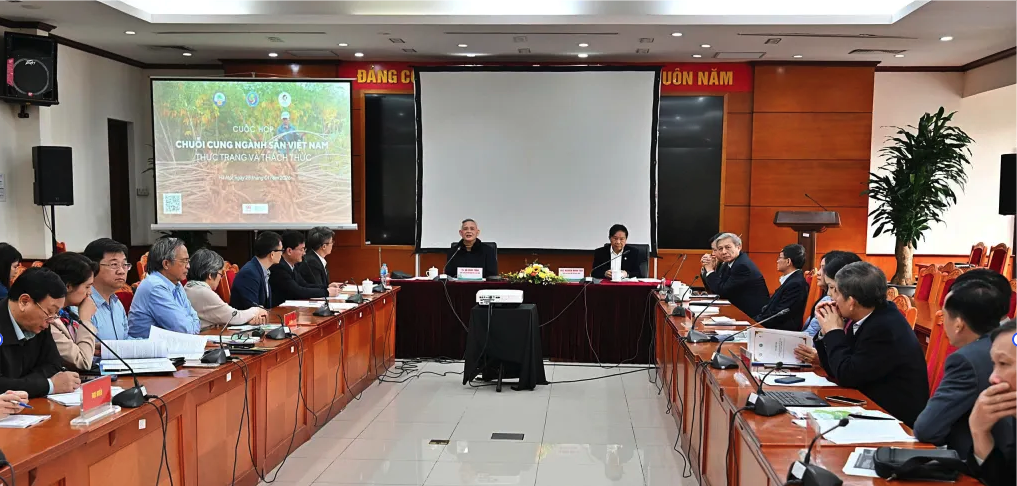
Photo 1. Overview of the meeting. Source: Reporter Bảo Thắng
The meeting was attended by representatives from the Ministry of Agriculture and Rural Development, including: the Department of Crop Production and Plant Protection, VNFOREST, the Department of Cooperative Economy and Processing; along with research and training institutions such as the Vietnam Academy of Forest Sciences, the Institute of Agricultural Planning and Design, the Vietnam Academy of Agricultural Sciences, the Vietnam National University of Agriculture, and the Vietnam National University of Forestry. Additionally, the meeting included representatives from the Central Strategic Policy Committee, the Import-Export Department (Ministry of Industry and Trade), cassava production, processing, and import-export enterprises, international organizations, and press agencies.
The cassava production, processing, and trade sector (cassava industry) makes a significant contribution to Vietnam's agricultural commodity trade. Cassava is currently one of the important crops for the livelihoods of approximately 1.2 million farmers, primarily concentrated in midland, mountainous, and disadvantaged areas. Due to increasing demand for raw cassava and processed cassava products, especially cassava starch and dried cassava chips, in both international and domestic markets. Vietnam's domestic consumption and especially its cassava export turnover have grown strongly, reaching approximately 1.3 billion USD in 2025, making Vietnam the world's third-largest cassava exporter, after Thailand. Currently, the cassava industry has invested in environmentally friendly production, and its products have more diverse applications.
Vietnam is both a major raw cassava producer and a large-scale cassava processing and export hub in the region, with raw material input for processing sourced from both domestic production and imports. Vietnam's total annual raw cassava supply exceeds 18 million fresh tons, of which domestic supply accounts for approximately 58%, and the remaining 42% comes from imports, with supply from Laos and especially from Cambodia accounting for nearly 100% of imports. Domestic supply originates from over 500 thousand hectares of cassava cultivation areas, providing approximately 10 million fresh tons of cassava annually. Annual imported supply is equivalent to 8 million fresh tons of cassava. In recent years, the nationwide cassava cultivation area has generally shown a slight decrease. However, in some localities with forest areas, cassava cultivation areas are continuing to expand. This raises concerns about the link between the expansion of cassava cultivation areas and forest resources.
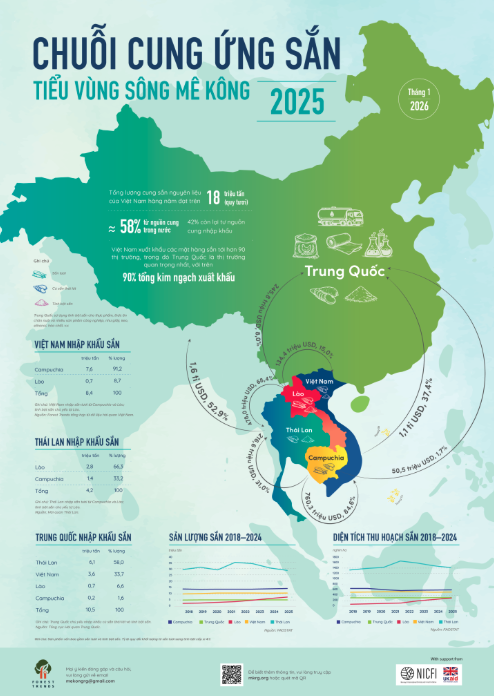
Photo 2. Greater Mekong Subregion Cassava Supply Chain 2025. Source: Forest Trends
International markets are increasingly imposing requirements for legality, traceability, and deforestation-free products. A recent example is the European Union Deforestation Regulation (EUDR), which is currently applied to the coffee, rubber, and timber sectors. The United States, the United Kingdom, Japan, South Korea, and Australia have been introducing new regulations to prevent agricultural and forestry products with unclear origins, or whose production processes cause deforestation and forest degradation, from being imported into these markets. In China, Vietnam's most important cassava import market, regulatory agencies and importing enterprises are increasingly imposing stricter requirements on the quality and traceability of imported products. Vietnamese cassava products are and will continue to face challenges in meeting these regulations in the near future.
Dr. Ha Cong Tuan, President of the Vietnam Association of Agricultural Economics and Rural Development, stated: “The biggest challenge currently facing Vietnam's cassava industry in ensuring traceability lies in the raw material segment, both from domestic Smallholders and from imports.” Currently, domestic supply is primarily cultivated on small, fragmented plots by Smallholders, traded through intermediaries, and lacks information on land use activities and transactions between Smallholders and traders, making traceability difficult; in many cases, it is impossible. Similar difficulties exist in the imported supply stream: importing enterprises either do not know or lack information about production areas, and lack evidence of transactions.
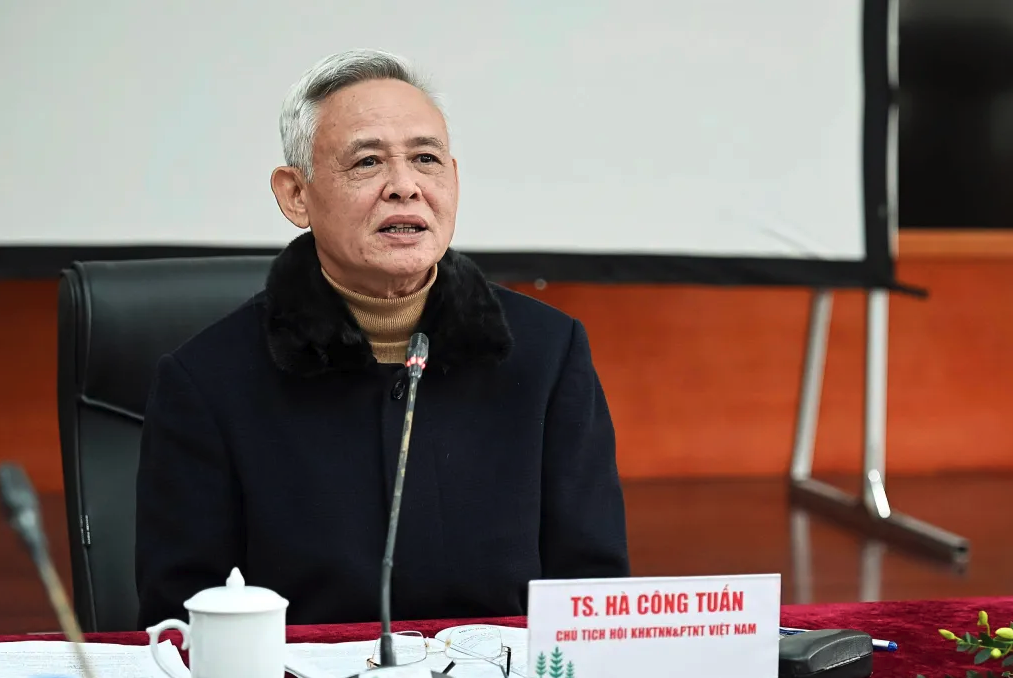
Photo 3. Dr. Ha Cong Tuan, President of the Vietnam Association of Agricultural Economics and Rural Development, shares his presentation. Source: Reporter Bảo Thắng
The Vietnamese Government has issued many important policies to orient the sustainable development of the cassava industry, notably the project “Sustainable Development of the Cassava Sector to 2030, Vision to 2050”, along with mechanisms to encourage production linkages and appropriate development. However, the implementation of these policies in practice still faces many limitations, lacking specific guidance, monitoring tools, and failing to create sufficiently strong incentives to encourage actors in the supply chain to comply with requirements for traceability, transparency, and forest protection. The government has also prioritized product traceability, emphasizing the goal that by 2026, Vietnamese agricultural and forestry products exported abroad must implement traceability. These are key factors to mitigate risks, combat deforestation, maintain export markets, and ensure sustainable livelihoods for millions of cassava-growing households in the future.
Dr. Nguyen Vinh Quang, a researcher at Forest Trends, shared his view: “To ensure traceability in line with the Government's direction, the cassava industry needs to restructure its current supply chain, effectively control production, especially land use activities, convert all informal activities to formal ones, make all activities in the chain transparent, and ensure sufficient evidence for traceability.”
Mr. Nghiem Minh Tien, President of the Vietnam Cassava Association, affirmed: “Enterprises in the industry are committed to achieving supply chain transparency, ensuring compliance with all requirements regarding forest protection, environmental protection, and traceability. However, cassava industry enterprises urgently need support and guidance from regulatory bodies to ensure these requirements can be met.”

Photo 4. Mr. Nghiem Minh Tien, President of the Vietnam Cassava Association. Source: Reporter Bảo Thắng
Restructuring the supply chain in a way that enables traceability requires the industry to receive adequate priority from the Government and relevant agencies. “Compared to other commodities such as coffee, timber, etc., the cassava industry has not yet received adequate attention from the Government. With 1.2 million Smallholders, including many ethnic minority households in disadvantaged areas, currently involved in production, the cassava industry deserves high attention from the Government.” Dr. To Xuan Phuc of Forest Trends stated his view.
Through the discussions at the meeting, delegates unanimously agreed that restructuring the cassava industry supply chain towards transparency, legality, and traceability is an urgent requirement in the context of Vietnam accelerating the implementation of its commitments to forest protection and sustainable agricultural development. To achieve this goal, the cassava industry needs stronger attention, priority, and support from the Government and regulatory agencies, especially in finalizing the policy framework, issuing specific guidelines, developing monitoring tools, and creating incentives for supply chain actors to participate in implementation.
The meeting helped clarify the core challenges of the current cassava industry supply chain, while also opening up directions for cooperation among state management agencies, industry associations, businesses, research organizations, and international partners to promote traceability, mitigate deforestation risks, protect the environment, and ensure sustainable livelihoods for over one million cassava-growing households. This is considered an important premise for Vietnam's cassava industry to develop stably, sustainably, and meet the increasingly high demands of domestic and international markets.
No thoughts shared yet. Be the first to share your thoughts!