Currently, there are about 320,000 ha of rubber plantations in Laos, of which about 60% of the total area is in the North, 17% in central Laos, and 23% in the south. Approximately 70% of the total rubber production areas are managed through concessions and contract farming by foreign companies, while only 30% are smallholder-owned. The Lao government recognizes the strategic role of the rubber sector in socio-economic and livelihood development. In 2024, rubber exports were valued at approximately USD 450 million, ranking the commodity among the country’s top ten exports.
Lao PDR exports all of its rubber, both block rubber and cup lump, to just two countries: China and Vietnam, due to the lack of a national rubber standard. It remains unclear whether the Lao rubber exported to these countries is later processed into products destined for the EU market.
The European countries currently demand higher standards for importing products, including natural rubber. The EUDR is the new EU initiative to limit deforestation caused by forestry and agricultural activities all over the world. For Laos, three commodities namely coffee, rubber and timber required strict compliance to sustainability standards if these products to be exported to EU. The compliance deadlines are December 2025 for large business and June 2026 for SMEs. Business must submit a Due Diligence Statement that includes risk assessments and geolocation data to ensure deforestation-free production in their supply chains. The actions requested by EU pose significant challenges for the smallholders and processors in China, who are the main actors in the rubber supply chain . There were a series of EUDR awareness raising in the country and in the region. However, Laos currently is not yet organized for EUDR compliance.
Since 2022, when the EUDR was still in draft form, stakeholders in Vietnam’s rubber sector, from central government bodies to enterprises and smallholder farmers, have undertaken multiple activities to prepare for compliance with the EUDR requirements. The experience and practices from Vietnam could serve as a valuable lesson for Laos in preparing its own rubber sector.
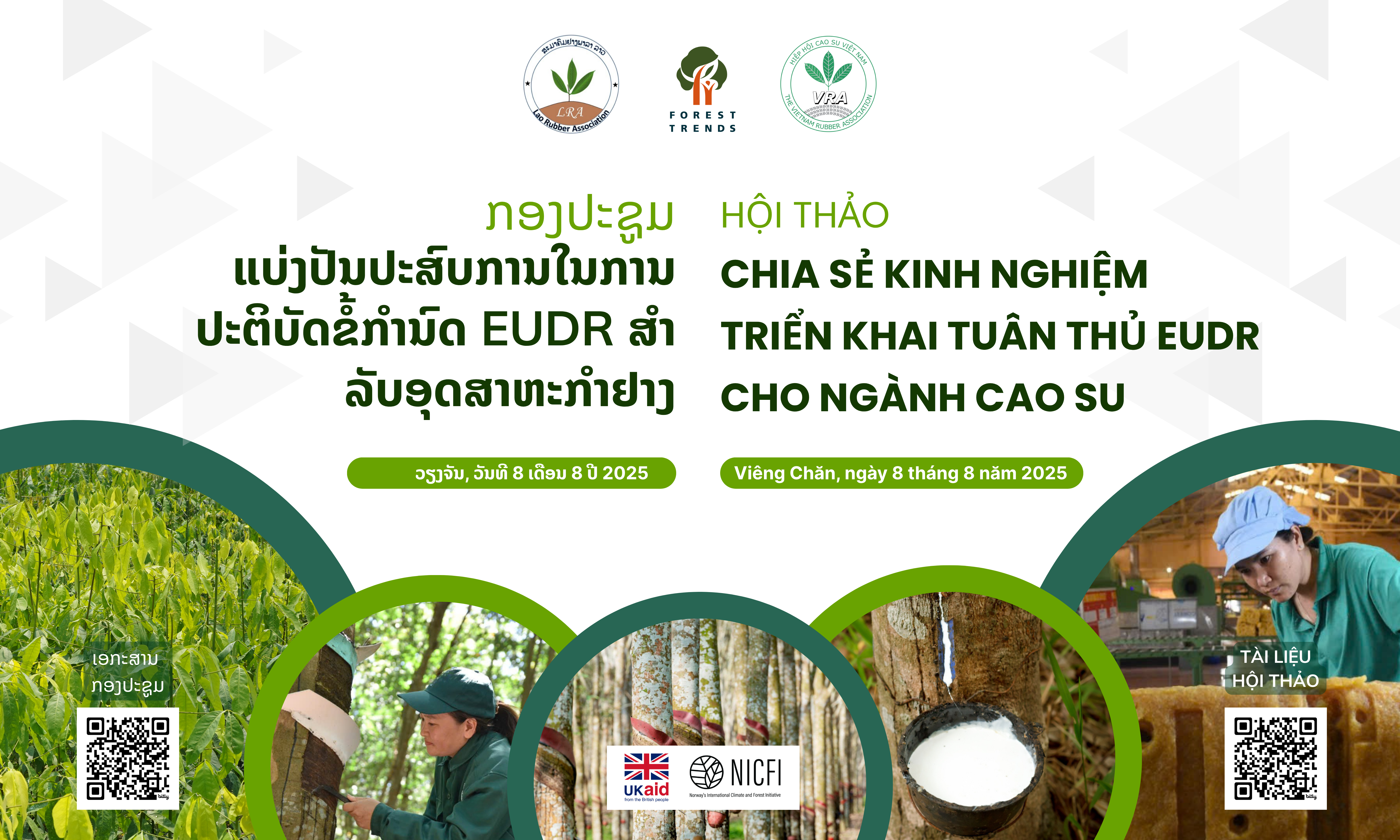
On August 8, 2025, at Lao Plaza Hotel, Vientiane, Lao Rubber Association (LRA), Vietnam Rubber Association (VRA) and Forest Trends co-organize a training workshop, which aims to provide better understanding of EUDR and to share practical experiences of various actors from Vietnam in response to EUDR, to Laos’s rubber stakeholders. It also sets space for discussions on ways forward for EUDR compliance for rubber sector in Laos.
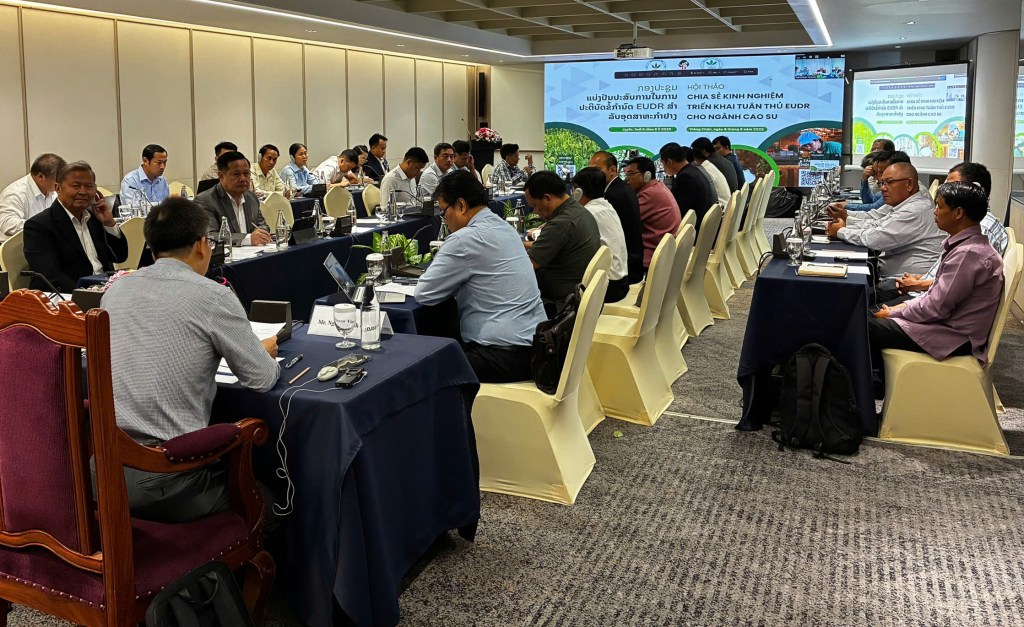
The workshop brought together over 35 participants, including representatives from the Ministry of Agriculture and Environment of Laos (Permanent office, Department of Forestry, Department of Agriculture, Department of Planning, Rubber Research Center NAFRI); Provincial Agriculture and Environment Offices (PAEO) of Vientiane, Louangprabang, Xaysomboune, Xayabouly and Savannakhet; Lao, Thai, Chinese and Vietnamese rubber companies operating in Laos; rubber smallholders; development agencies (GIZ); and national media.
Photo 1. General view of the workshop
Source: VRA
From Vietnam, participants included representatives of the International Cooperation Department of the Ministry of Agriculture and Environment (the national focal agency for EUDR implementation), the Vietnam Rubber Association (VRA), Vietnamese rubber companies, and Forest Trends. They shared insights on Vietnam’s preparation process - ranging from government-led strategies to business practices- and the technical and financial challenges faced by smallholders.
“Some provisions of the EUDR are still interpreted differently among countries and stakeholders across the supply chain. This underscores the urgent need for regular, transparent, and substantive technical exchanges between producing countries and the EU, in order to harmonize interpretations and facilitate effective implementation.” – Dr. Nguyen Trung Kien, Department of International Cooperation – Ministry of Agriculture and Environment of Vietnam, expressed.
Mr. Kien also emphasized: “The EUDR is the most stringent legal regulation to date for products associated with deforestation and forest degradation that are exported to or imported into the EU. It not only requires that the production of such products must not cause deforestation or forest degradation and must comply with the laws of the producing country, but also mandates full traceability throughout the entire supply chain down to each individual production plot.”
“Although EUDR is not yet in force, Vietnamese rubber companies are increasingly paying attention to it. Importers from not only the EU but also other global markets are beginning to require EUDR-compliant products.” – Ms. Phan Tran Hong Van, Deputy Secrectary General, Vietnam Rubber Association, reported.
“In Vietnam, smallholder rubber producers face the greatest challenges in meeting the requirements of the EUDR due to technical and financial constraints, as well as their small and fragmented production scale. To enable compliance, appropriate guidance and support from local authorities, technical assistance providers, and the traders or processing companies that purchase raw latex from these households, are essential.” Mr. Nguyen Vinh Quang, Forest Trends, shared.
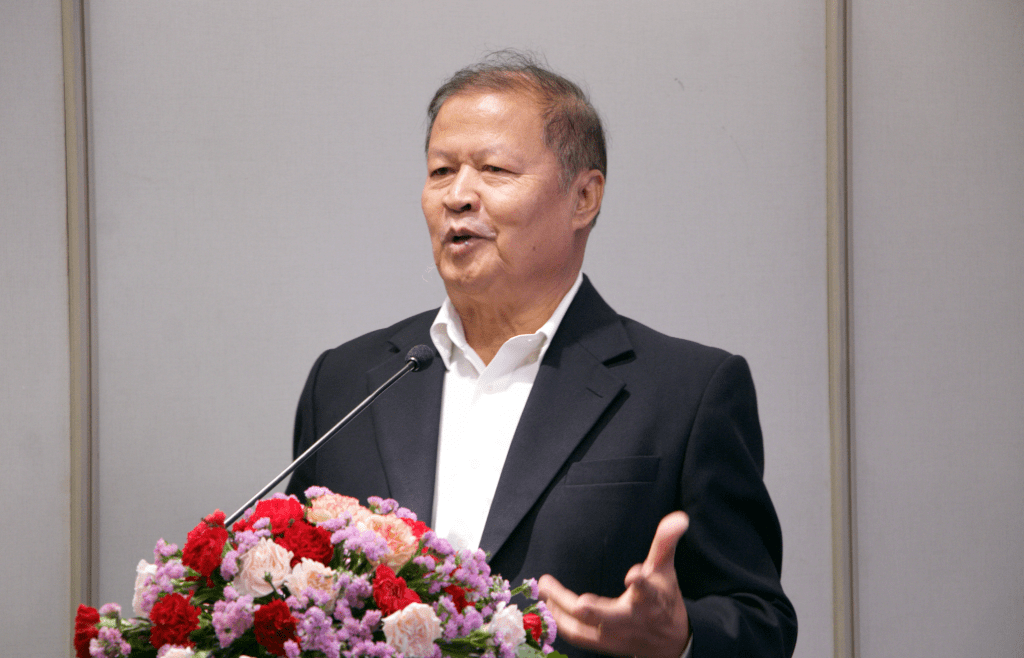
“Learning from Vietnam’s experience and strengthening multi-stakeholder coordination will help Laos’ rubber sector gradually build a solid foundation to meet demanding requirements like the EUDR.” – Dr Bounthong Bouahom, Chaiman of the Lao Rubber Association, shared his opinion.
Photo 2. Dr. Bounthong Bouahom, Chaiman of the Lao Rubber Association
delivering his presentation at the workshop
Source: LRA
The workshop highlighted the joint efforts of Viet Nam and Lao PDR in adapting to the EUDR, with the active participation of government agencies, enterprises, and industry associations. Delegates emphasized the importance of maintaining regular dialogue with the EU, strengthening public–private partnerships, and providing support to vulnerable actors in the supply chain, particularly smallholders and traders.
In Viet Nam, large-scale rubber plantations have significant advantages in meeting the requirements of the EUDR, while smallholders need to be organized into groups with binding commitments to leverage their collective strengths. Enterprises with the capacity and experience in adaptation are expected to play a supportive role for smallholders and smaller companies. The Government will accompany these efforts by developing databases and providing tools for traceability, thereby enhancing transparency and meeting market requirements.
The Lao side acknowledged and highly valued Viet Nam’s practical experience, considering it a useful reference for improving policies and effective implementation. VRA appreciated the exchange of experience between the two countries and affirmed its commitment to continued cooperation with the LRA through joint activities, study visits, and practical model demonstrations, thereby promoting the development of a transparent, sustainable, and competitive rubber supply chain in the international market.
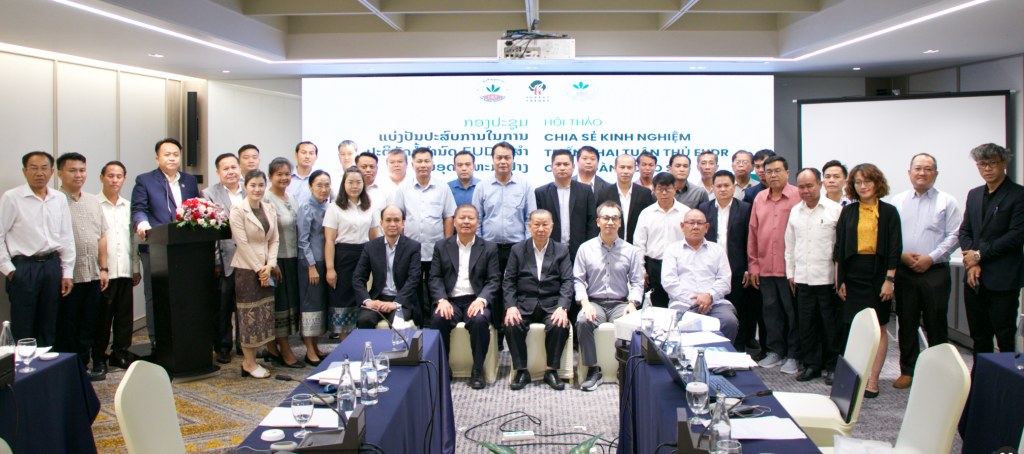
Photo 3: Delegates attending the workshop
Source: VRA
All inquiries can be directed to Dr. Bounthong Bouahom (Email bounthongbouahom@gmail.com; Phone: (+856) 20 55 516 540).
No thoughts shared yet. Be the first to share your thoughts!