Tokyo, May 21, 2025 — In an effort to enhance collaboration between Vietnamese and Japanese enterprises in the wood pellet production and trade sector, a seminar was held in Tokyo on the sidelines of the Asia Bioenergy Conference 2025. The event focused on sharing updates regarding market trends and legal regulations pertaining to wood pellet products in both countries. Organized jointly by Forest Trends, the Vietnam Wood Pellet Association (a subsidiary of the Vietnam Timber and Forest Products Association – VIFOREST), and the Japan Biomass Power Association (BPA), the seminar aimed to foster mutual understanding and cooperation.
The seminar attracted numerous representatives from government agencies, leading Vietnamese wood pellet producers and traders, as well as Japanese importers, end-users, and biomass energy experts. It served as a vital platform for exchanging information on market dynamics and jointly strategizing the development of a transparent, sustainable wood pellet supply chain that adheres to international standards.
Figure 1: Mr. Keisuke Nakajima – President of the Biomass Power Association (BPA) expresses a desire to strengthen cooperation with Vietnamese associations and enterprises.

Photo: Forest Trends
Vietnam – A Key Supplier of Wood Pellets to Japan
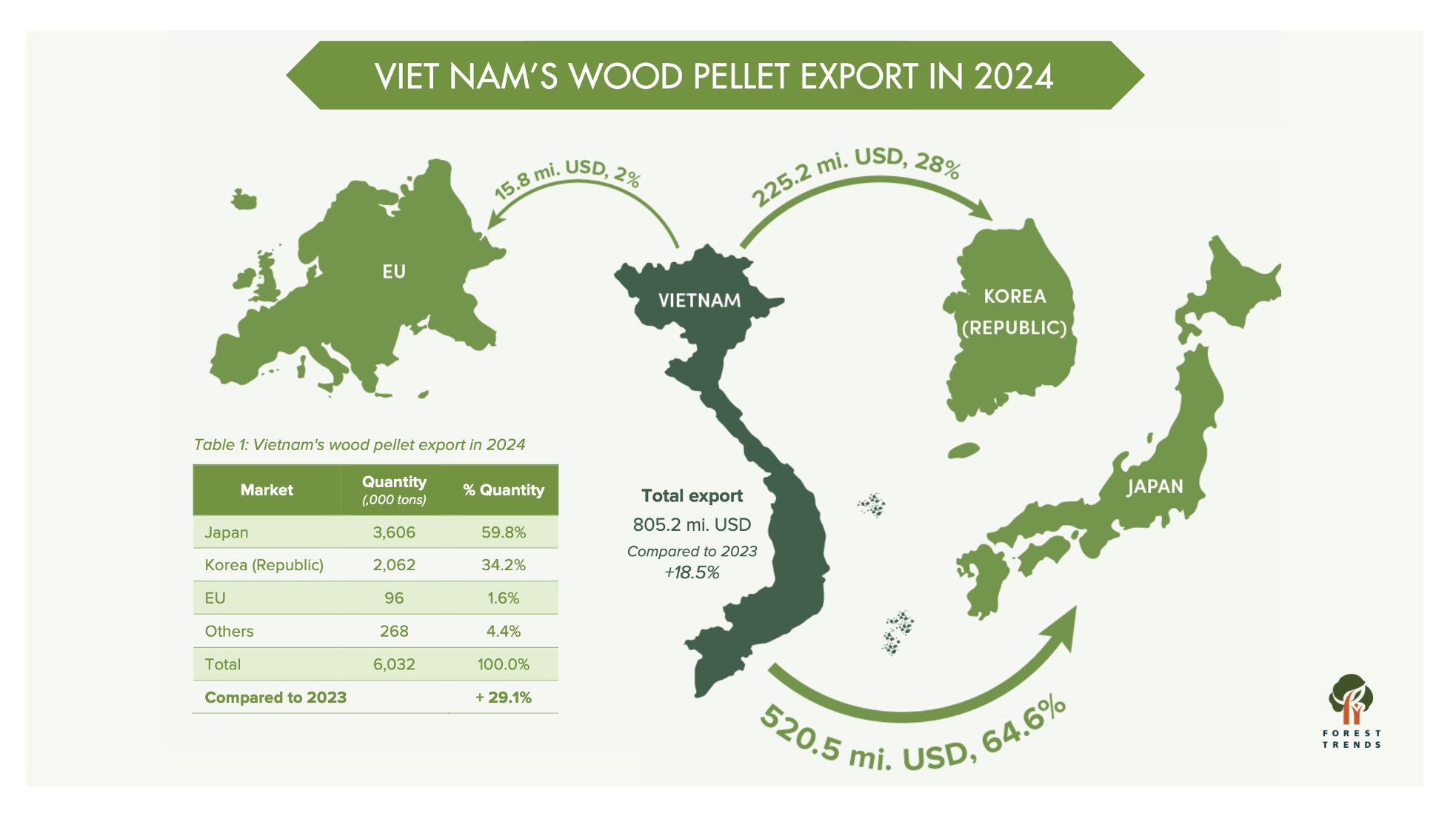
Dr. Tô Xuân Phúc, Executive Director of the Forest Policy, Trade, and Finance Initiative at Forest Trends, reported that Vietnam is currently the world's second-largest exporter of wood pellets. In 2024, the country exported over 6 million tons of wood pellets, with Japan accounting for approximately 59.8% (3.6 million tons) of this volume. This positions Vietnam as the leading supplier of wood pellets to the Japanese market. Additionally, South Korea remains a significant market, importing 34.2% (nearly 2.1 million tons) of Vietnam's wood pellet exports in 2024. Overall, Vietnam's wood pellet exports in 2024 increased by nearly 30% compared to 2023. Scribd
Figure 2: Overview of Vietnam’s wood pellet exports in 2024.
Source: Forest Trends research team based on Vietnam Customs data
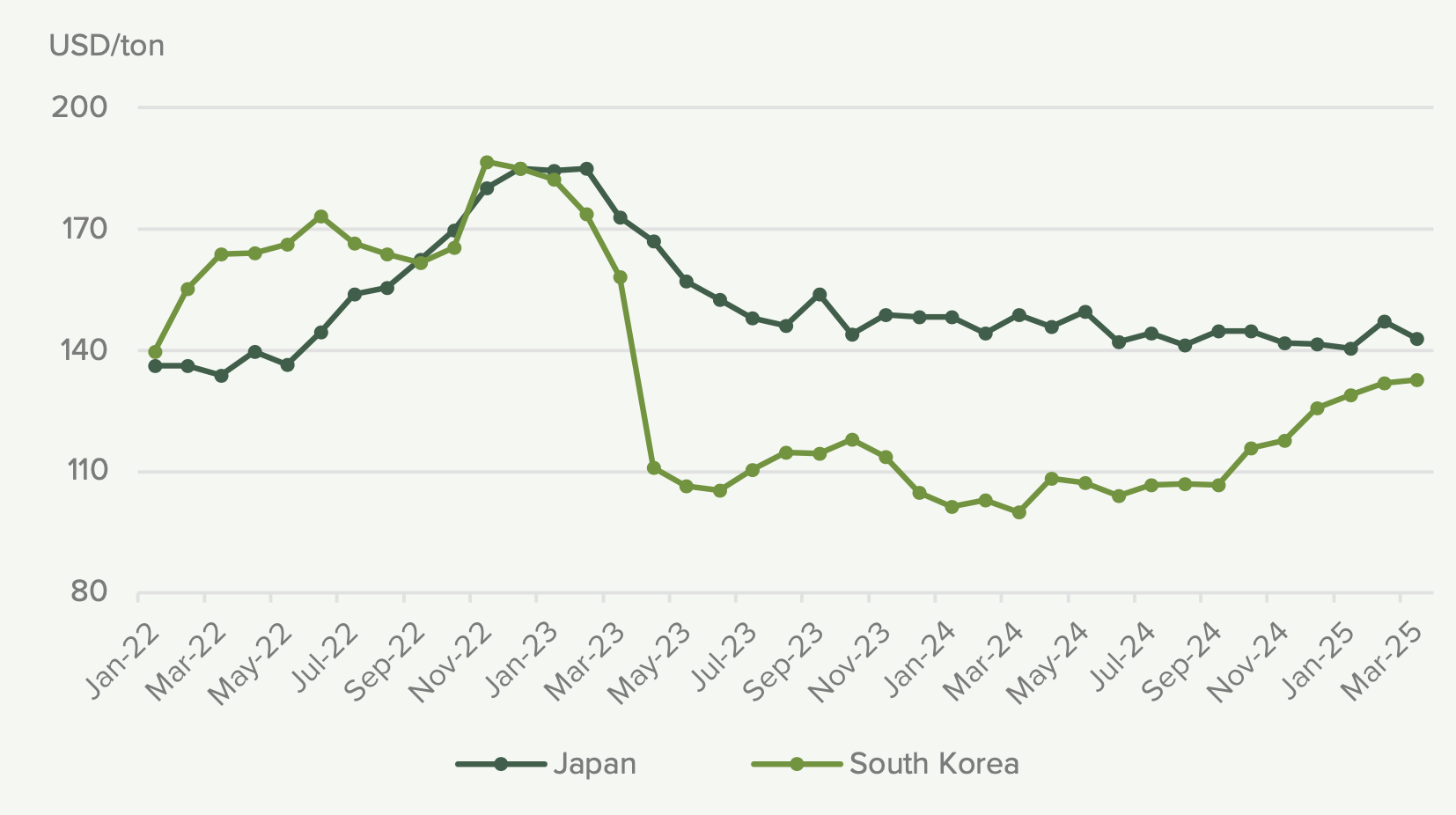
Vietnam's wood pellet export revenue reached $805.2 million in 2024, marking an 18.5% increase from the previous year. The average export price stood at approximately $133.5 per ton. Specifically, the average export price to Japan was $144.3 per ton, remaining relatively stable compared to 2023. In contrast, the South Korean market experienced a notable price increase from over $100 per ton at the end of 2024 to more than $130 per ton.
Figure 3: Average export prices of Vietnam’s wood pellets in key markets through Q1/2025
Source: Forest Trends research team and timber associations’ analysis based on Vietnam Customs data
Japanese partners typically engage in long-term contracts with stringent quality and sustainability requirements, leading to higher and more stable production costs and selling prices. Conversely, South Korean buyers often procure wood pellets through monthly or quarterly tenders without strict quality or origin requirements, resulting in more volatile export prices influenced by short-term market conditions and raw material availability.
Figure 4: Mr. Nguyễn Thanh Phong – Head of the Vietnam Wood Pellet Association shares insights on the export cost structure of wood pellets.

Photo: Forest Trends
Vietnam currently hosts approximately 90–100 wood pellet manufacturing plants, with a combined annual capacity estimated between 4.5 and 6 million tons. Over 98% of this production is designated for export. The primary raw materials include imported wood and domestically grown plantation timber. Imported wood supplies by-products (such as sawdust, shavings, wood chips, and offcuts) from the processing of other wood products, sourced from countries with robust forest governance like the EU, USA, Canada, and Japan, as well as smaller quantities from less sustainable tropical sources like Africa and Laos. Domestically, plantation timber—mainly acacia, rubber, and eucalyptus—provides over 30 million m³ annually, including 4–5 million m³ of rubberwood, contributing by-products like bark, shavings, sawdust, branches, and offcuts for pellet production. Notably, during periods of high prices, such as in 2022, small-diameter trees were also harvested for pellet manufacturing (Figure 4).
Figure 5: Raw material sources for wood pellet production
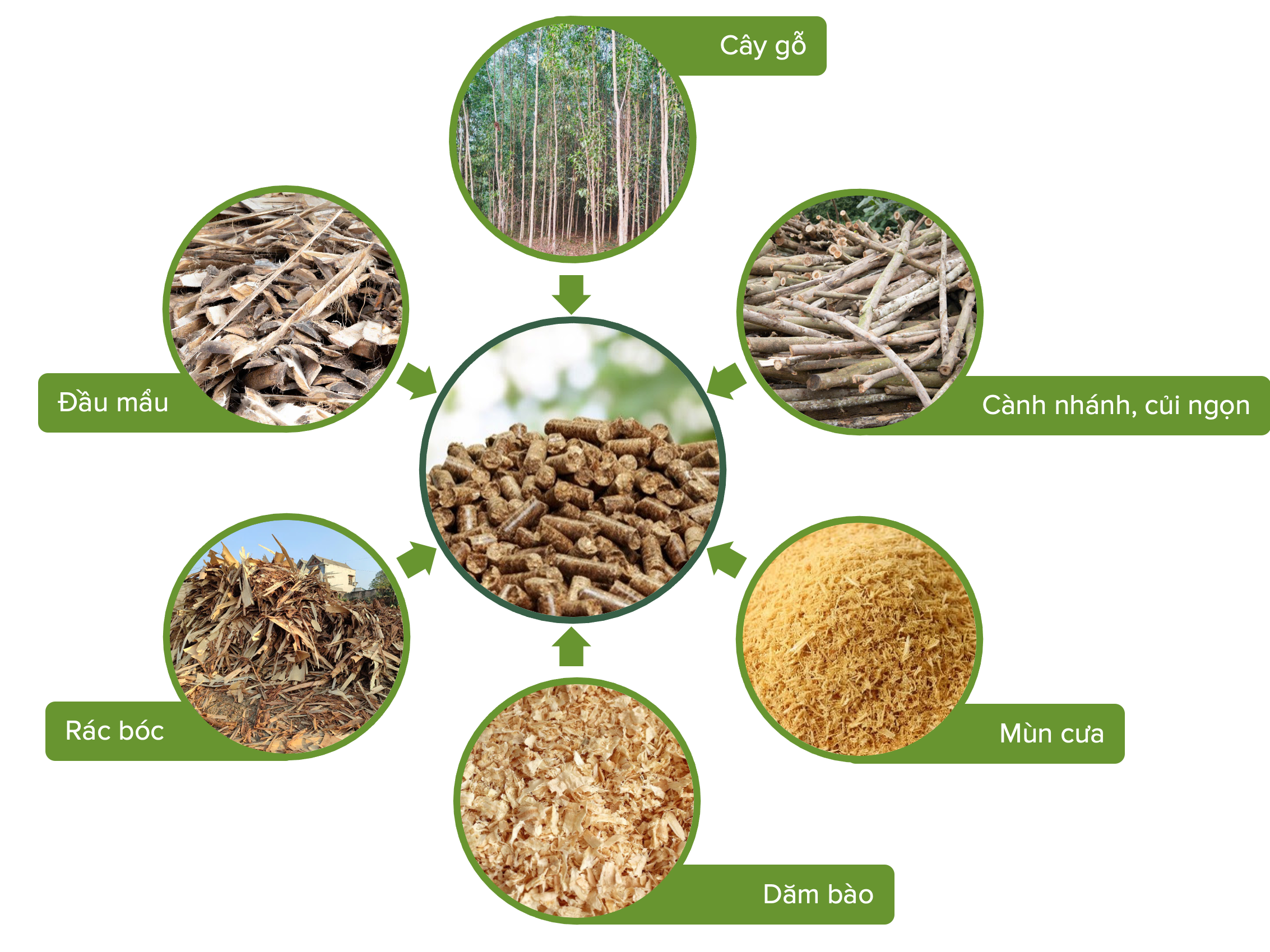
Photo: Forest Trends
The supply of raw materials for wood pellets still faces many challenges
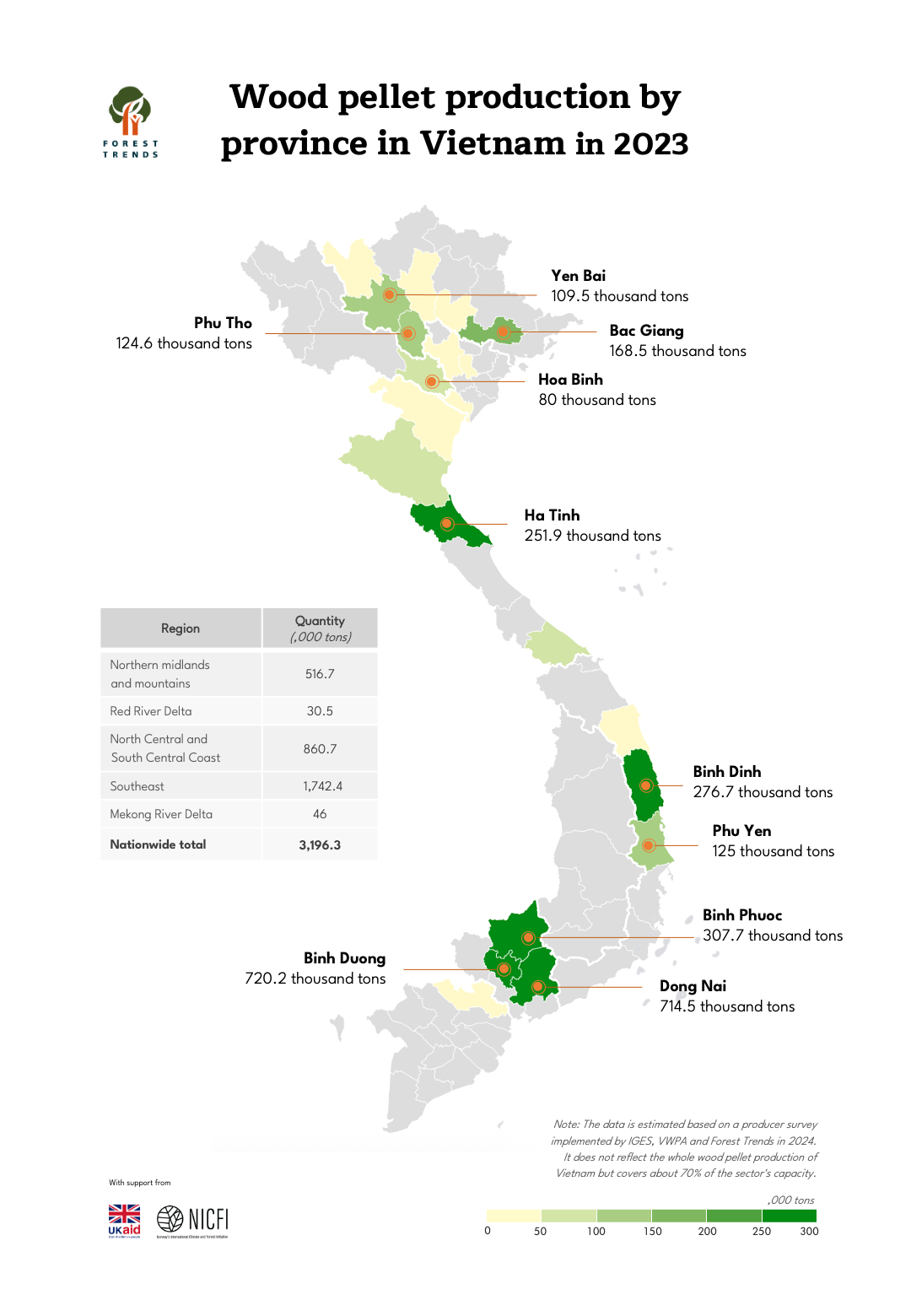
The map of Vietnam’s wood pellet production distribution (Figure 5) reflects the geographic distribution of raw material sources. Data from Forest Trends, IGES, and the Vietnam Wood Pellet Association indicate that the Southeast region is Vietnam's largest wood pellet production hub, producing over 1.7 million tons in 2023. This is followed by the North Central and Central Coastal regions (860,700 tons) and the Northern Midlands and Mountainous areas (516,700 tons).
Figure 6: Map of Vietnam’s wood pellet production distribution in 2023
Source: Illustration by Forest Trends based on survey data by Forest Trends, IGES, VWPA, and VIFOREST
Raw material sources vary significantly across regions. In the North, raw materials primarily come from by-products of domestically grown plantation forests. A large number of smallholder farmers participate in the supply chain, but most are not certified and sell directly to traders or processing facilities without thorough documentation or proof of timber origin, increasing the complexity of traceability. In the Central region, a relatively large portion of the raw materials comes from FSC- or PEFC/VFCS-certified plantation forests, making traceability more feasible. However, wood pellets in this area face intense competition for raw materials from the woodchip industry. In contrast, the South is home to large-scale pellet plants that use wood by-products sourced from processing factories, including both domestic and imported materials. The South Central region (e.g., Bình Định) and Southeast region (e.g., Ho Chi Minh City, Bình Dương, Đồng Nai) are key hubs for wood product exports. Vietnam's largest pellet manufacturers have built very large-scale factories—each with a capacity exceeding 100,000 tons/year—to take advantage of the abundant supply from these areas. However, since the COVID-19 pandemic and due to the economic downturn and trade barriers such as U.S. tariffs imposed in early 2025, overall wood processing activity has been significantly reduced. This has led to a noticeable contraction in the raw material supply, forcing pellet producers to compete more aggressively for input materials—especially against the particleboard industry.
Figure 6: Map of FSC-certified forest areas (left) and PEFC-certified areas (right) in Vietnam as of May 9, 2025.
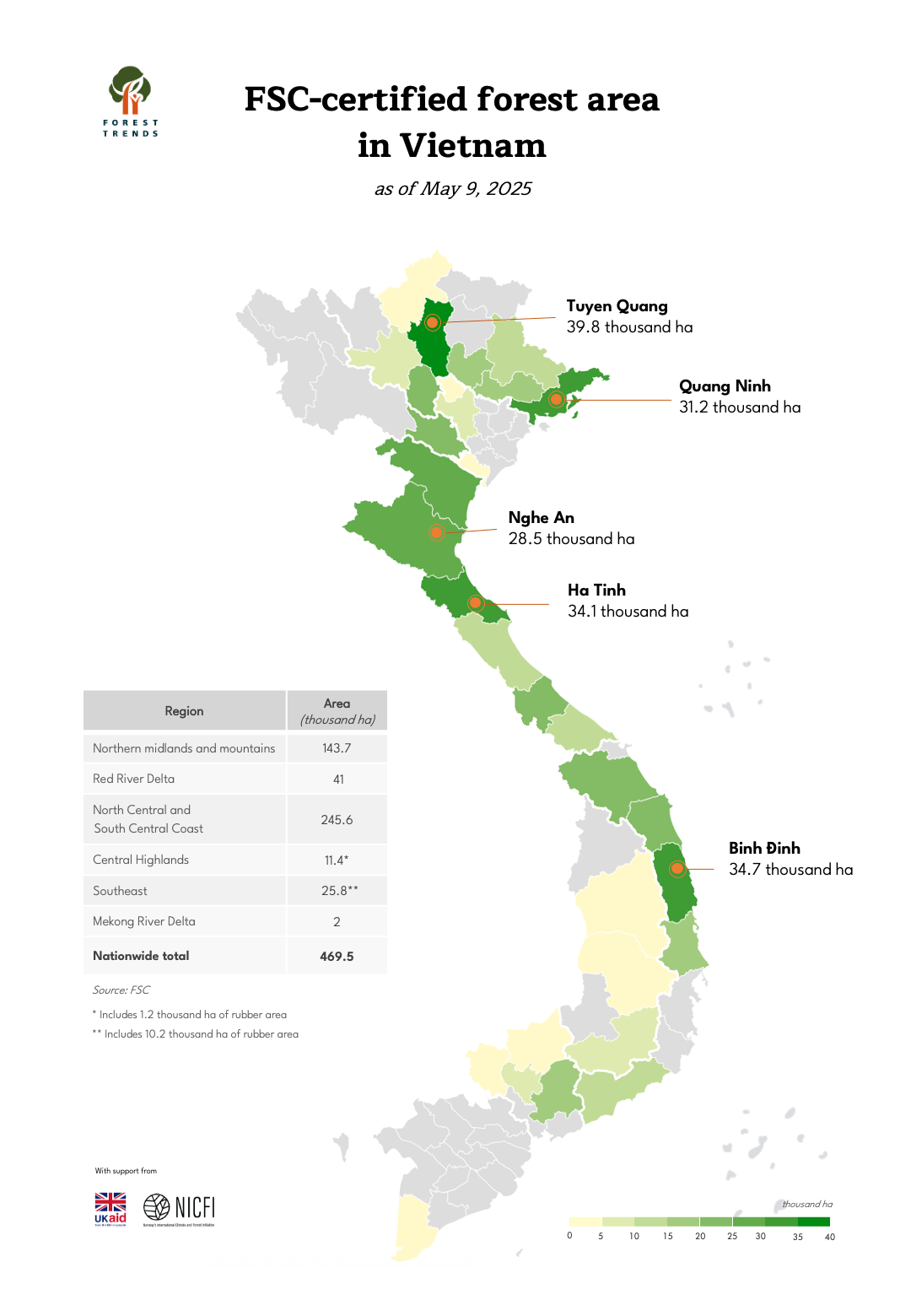
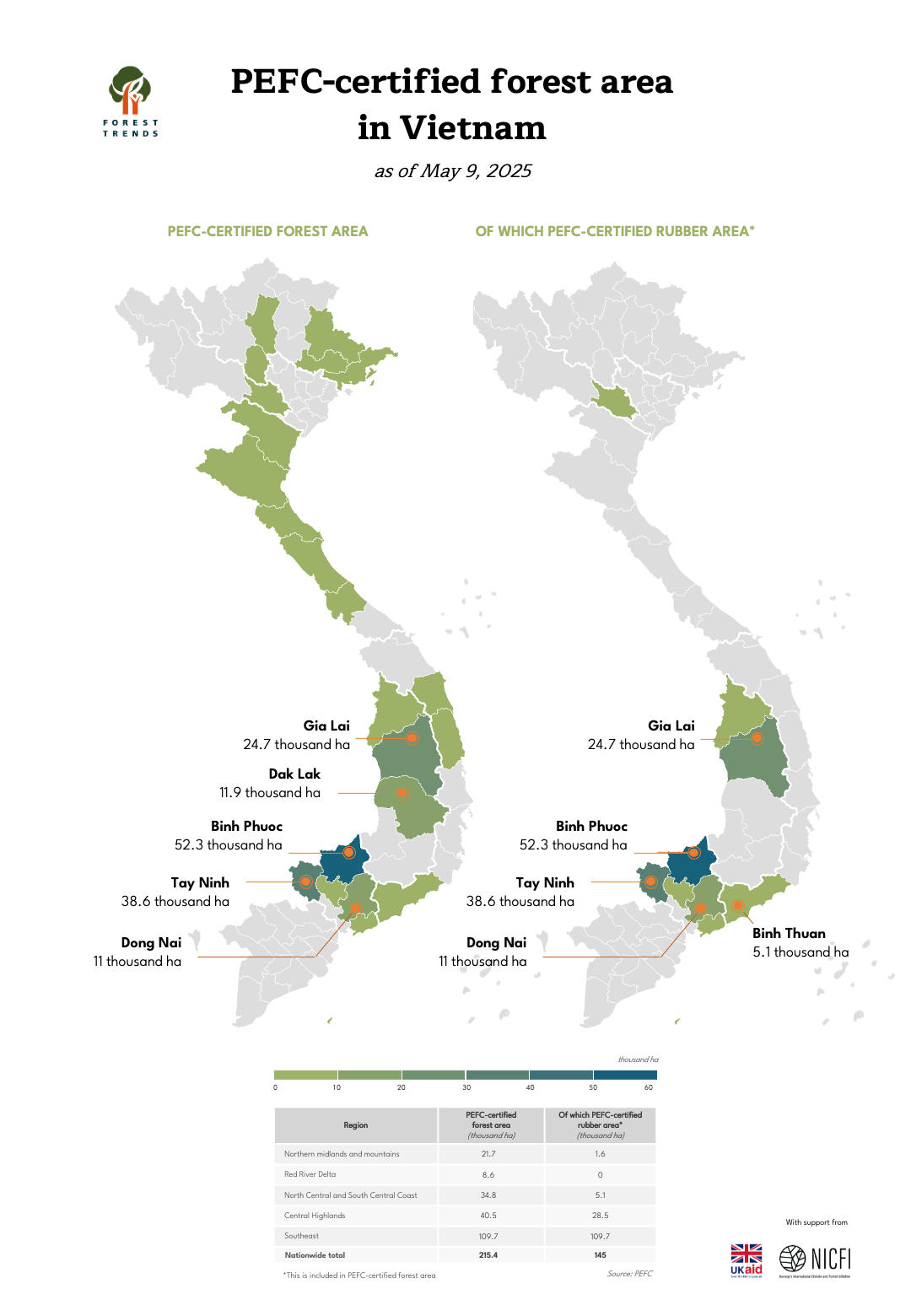
Photo: Forest Trends
As of May 2025, Vietnam has achieved 469,500 hectares of FSC-certified forests, with provinces like Tuyên Quang, Bình Định, and Hà Tĩnh leading in certified areas. Additionally, the country has 215,400 hectares of PEFC/VFCS-certified forests, including 145,000 hectares of rubber plantations. The Southeast region, particularly provinces like Bình Phước (52,300 ha), Tây Ninh (38,600 ha), and Đồng Nai (11,000 ha), plays a pivotal role. The Central Highlands also contribute nearly 41,000 hectares of PEFC-certified forests. These certified areas, especially mature rubber plantations, are expected to provide legal and traceable raw materials for the wood pellet industry in the future.
Strengthening legal frameworks and EUDR compliance
Dr. Trương Tất Đơ, representing Vietnam's Department of Forestry and Forest Protection, highlighted the country's robust legal framework to ensure the legality of timber sources, notably the Vietnam Timber Legality Assurance System (VNTLAS), a key component of the VPA/FLEGT agreement with the EU.
In February 2025, Vietnam issued provisional guidelines for complying with the EU Deforestation Regulation (EUDR), conducted multiple training sessions for businesses and local authorities, developed geospatial databases of plantation areas, implemented plantation area coding systems, and promoted digital traceability documentation.
These initiatives aim to help Vietnamese enterprises meet the stringent requirements of the EU and Japanese markets, enhancing Vietnam's position in the global supply chain for legal and sustainable wood products.
Advancing technical and trade cooperation
The seminar also reaffirmed the commitment of Vietnam and Japan to long-term collaboration in forestry and biomass energy sectors. According to the Memorandum of Understanding between Vietnam's Department of Forestry and Japan's Forestry Agency, both parties will continue to cooperate in expanding forest certification, promoting REDD+ initiatives and carbon credits, sharing traceability technologies, and monitoring forest resources.
Figure 7: Delegates from Vietnam and Japan participating in the seminar.

Photo: Forest Trends
With active participation from stakeholders and ongoing enhancements to the legal framework, Vietnam is poised to remain a strategic partner in providing stable, transparent, and sustainable wood pellet supplies to the Japanese market, aligning with global efforts to reduce carbon emissions in production and consumption.
For access to the presentation materials and reference documents from the seminar, please click this LINK
No thoughts shared yet. Be the first to share your thoughts!