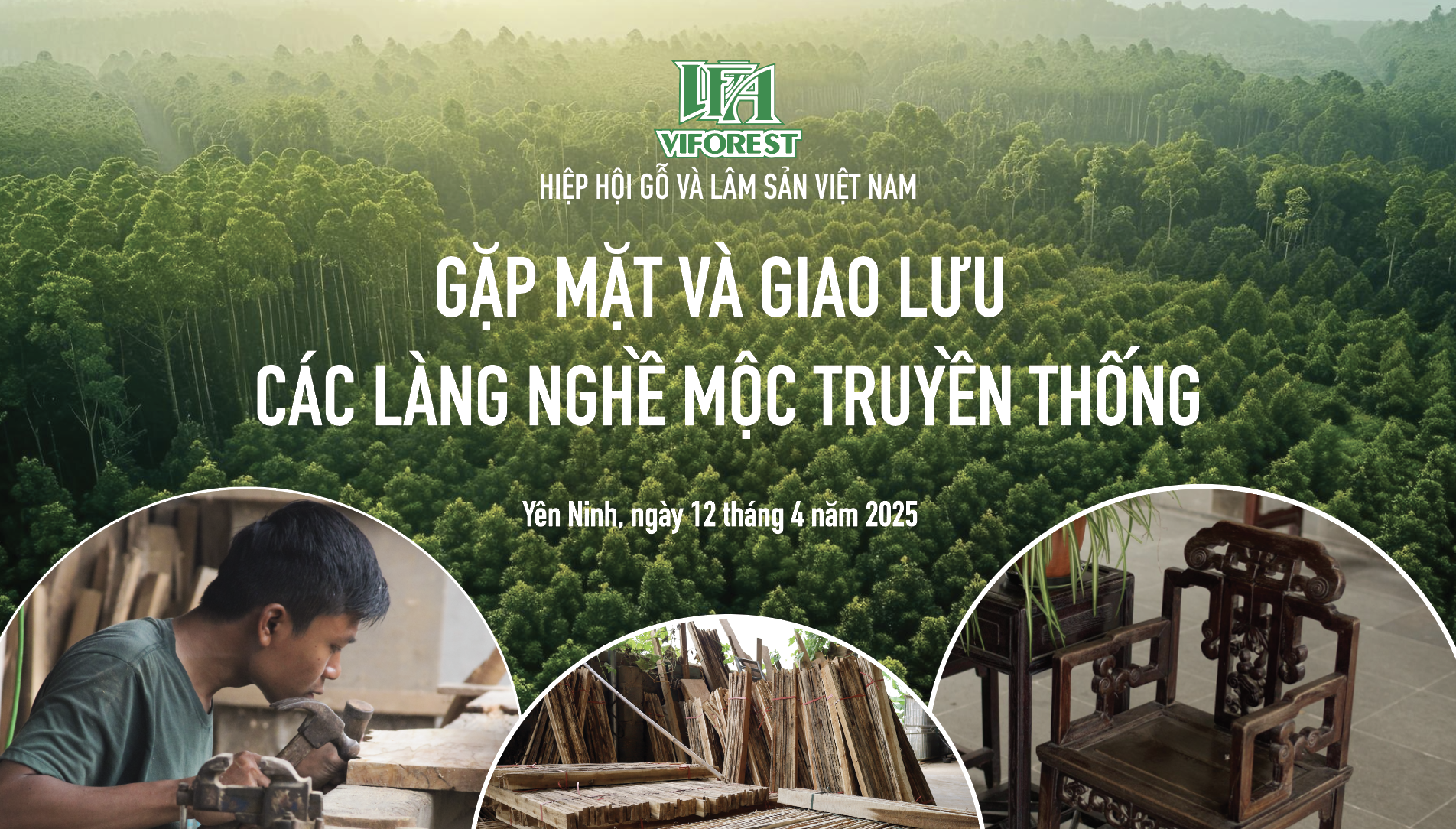
On April 12, 2025, representatives of the 10 largest carpentry villages in the North gathered at La Xuyen craft village, Yen Ninh commune, Y Yen district, Nam Dinh province to visit, exchange, and share experiences in maintaining and developing carpentry in the context of a fluctuating economy. The discussion had the participation of more than 50 households that are producing and trading products mainly made from natural wood along with a number of local leaders and companies that design, process and export wood.
Figure 1: Craft village delegation visits a wooden house factory in La Xuyen

Source: Forest Trends
At the discussion, delegates shared many concerns about fluctuations in the wooden furniture market in recent years. According to Mr. Ninh Xuan Phong, Secretary of Yen Ninh Commune Party Committee, in the commune there are two carpentry villages: La Xuyen and Ninh Xa, of which La Xuyen is a long-standing craft village with many generations of artisans who have made exquisitely carved wooden products, famous throughout the country and abroad such as mahogany tables, tea cabinets, altar items, etc. The craft village here has the advantage of a team of highly skilled carpenters, rich designs, much cheaper labor costs than other localities, and spacious production premises, helping La Xuyen's products have a great competitive advantage compared to other craft villages. However, until now, there is no enterprise in the commune that can access the international market and its products only serve the domestic market. In the context of economic recession since the COVID pandemic, craft villages have experienced many difficulties in recent years due to slow sales and households with a lot of capital stuck. Difficulties in finding outlets for craft village products are the main barrier to investing in expanding production development in the area.
Representing households in the village, Mr. Pham Ngoc Tuan - Chairman of La Xuyen Business Association - shared that although La Xuyen craft village has a history of nearly 1,000 years of development and a long-standing brand that has not been eroded until today, compared to Dong Ky craft village (Bac Ninh) - a younger craft village - La Xuyen is not as agile in grasping and adapting to market changes. Despite having the same starting point as craft villages famous for handicraft products made from natural wood, when the market signal became less positive in recent years because exporting to the Chinese market was no longer favorable, a number of households and businesses in Dong Ky have invested in shifting to producing and trading products with modern designs, less carving and using new materials from planted forest wood such as oak, walnut, ash, artificial boards, etc. etc. to reduce costs and suit contemporary tastes. On the contrary, households in La Xuyen are still loyal to familiar product designs and ancient handicraft production methods, so even though the products are exquisitely crafted and competitively priced, they are still increasingly picky about users.
Figure 2: Mahogany stand, tea cabinet - traditional products of La Xuyen craft village

Source: Forest Trends
Compared to craft villages that were born later and serve the popular wood furniture segment such as Lien Ha (Dan Phuong - Hanoi), craft villages with long-standing traditions and reputations seem to be held back by the elite heritage of craft villages passed down from their ancestors in the race to adapt to market changes. Giving up the old production model with many products that have built the brand of the craft village and created jobs for many generations is a big challenge. In fact, the craft village model still exists based on the main factors of cheap labor, affordable input wood prices, maximum savings in production costs due to little investment in factories and machinery, no emphasis on labor safety and environmental protection, and products with little added value.
According to the assessment of a representative of Nam Dinh Forest Products Joint Stock Company (NAFOCO) - one of the largest export enterprises in the North, the craft village production model uses wood input materials that are many times more expensive than NAFOCO's factory using 100% planted forest wood such as acacia, eucalyptus, rubber, etc., but the processing process is very wasteful and polluting because it hardly takes advantage of waste products from processing, consuming supplies and auxiliary materials such as glue, rubber, etc. painting, consuming labor due to fragmented manual production, not equipped with standard factories and machinery, affecting the health of the production households and people in the village in the long run. Households are still concerned about the output of converted products as well as the initial investment costs in machinery, wood drying kilns, etc. This is the main barrier that makes many households continue to produce according to the current material- and labor-intensive model even though output is unstable. Therefore, support from the government, associations and businesses is needed to connect, help households find stable output, and create motivation for households to research and invest in conversion.
In the context of international market fluctuations in recent years, households still face difficulties from input wood sources. Logs and sawn timber imported from Laos and Africa are the main source of raw materials for many craft villages such as La Xuyen (Nam Dinh), Van Diem, Canh Nau, Chang Son (Hanoi), Thuy Lan (Hung Yen), etc. to produce furniture, altar items and construction works. In addition to the unstable wood purchase price due to fluctuations in USD and EUR exchange rates, this group of wood also has many potential risks regarding origin and legality, which can affect the reputation of the craft village as consumers become more and more aware of the sustainability and environmental friendliness of the product. Although there is still a small group of customers wishing to buy these products, the increasingly narrowing market and poor consumption are alarming signals for carpentry villages, requiring households to find new directions if they want to maintain and develop the traditional profession of their homeland.
Photo 3: Craft village delegates exchange and share experiences at Yen Ninh Commune People's Committee

Source: Forest Trends
Mr. Nguyen Phuc Diep - a pioneer producer in Van Diem craft village (Thuong Tin, Hanoi) said he felt the market's shifting trend more than 10 years ago even when traditional wooden products had not yet fallen into the current decline stage. Younger generations of customers no longer favor these products like their grandparents and parents. They are creative and like modern, stylish designs that can even be combined with many other materials such as metal, plastic, stone, etc. to maximize usability. Differences in aesthetics and consumer thinking make precious wood products that are durable but heavy and difficult to combine with modern interiors, becoming less attractive and losing their inherent value. On the other hand, controversies about the origin of wood and the impact of deforestation also cause craft villages' products using natural wood to be associated with a negative and outdated image in the eyes of consumers.
Currently, the trend of synchronous tailor-made design for both home and interior is increasingly popular, opening up opportunities to reach young customers for the craft village through combining with design and construction units. Some pioneering households have pioneered this trend, experimentally producing new products using domestically grown and imported wood, finding customers through partnerships with companies or online sales channels, thereby successfully maintaining their operations despite the unfavorable market situation. In the long term, the transformation of the model of craft villages from high-volume, low-cost production that saturates the market today to tailor-made products that focus on designing according to customer requirements and using new, more environmentally friendly materials can reduce the number of production units in craft villages. However, when the added value content of products is increased and profits are higher, households that are competitive to maintain operations will have the opportunity and motivation to invest in technology, equipment, and expand production, thereby truly preserving and promoting the traditional profession of their ancestors.
No thoughts shared yet. Be the first to share your thoughts!