
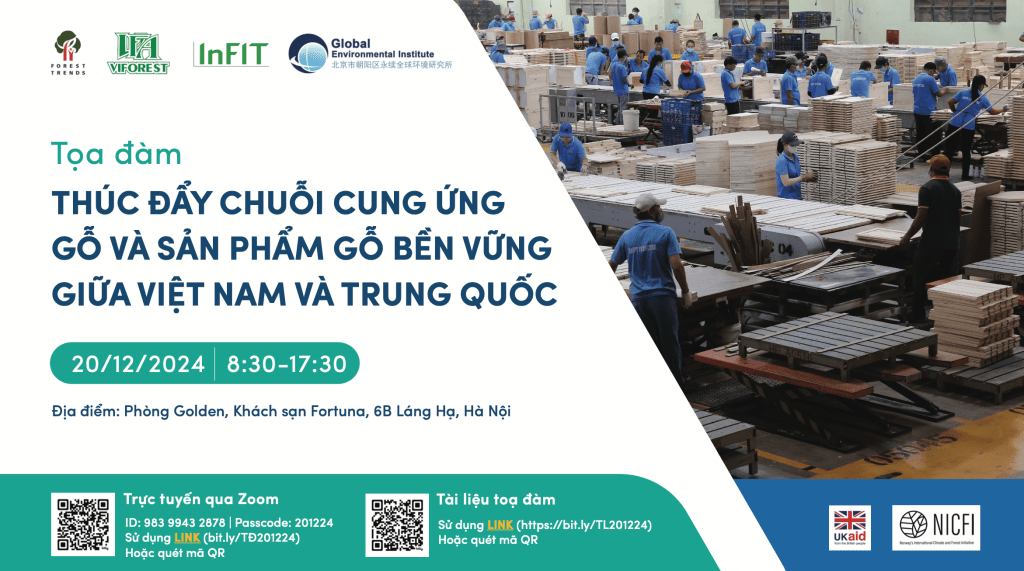
Hanoi, December 20, 2024 – The Vietnam Timber and Forest Products Association (VIFOREST), in collaboration with the China National Forestry Products Industry Association (CNFPIA), organized "Roundtable discussion: China-Vietnam sustainable timber and wood product supply chain development."
Vietnam-China trade relations play a crucial role, particularly in the forestry and wood processing sectors. Within the framework of the roundtable dialogue on Vietnam-China timber trade, several important topics were discussed, including the export of wood chips and compliance with international regulations on legal timber.
Forestry and wood processing industry in Vietnam
According to Mr. Nguyễn Tuấn Hưng, Department of Forestry, the country currently has over 22,000 timber processing facilities, with the majority being family-owned businesses. Most enterprises export their products to China, Japan, and other markets. The forestry sector makes a significant contribution to national economic growth but also faces numerous challenges, such as unstable raw material inputs and intense international competition.
In 2024, Vietnam is projected to harvest over 21 million m³ of timber, in addition to 9 million m³ of timber from rubber trees and scattered plantation forests. Since the government implemented a ban on natural forest logging in 2014, the country's timber processing industry has primarily relied on plantation timber and imports for raw materials. To reduce pressure on natural forests and ensure a sustainable supply, the government has introduced various support policies, such as tax incentives and measures to encourage investment in forest plantations.
Currently, Vietnam has over 500,000 hectares of forests certified for sustainability under FSC or PEFC standards, with a target to reach 1 million hectares of certified plantation forests by 2030. This not only enhances the value of exported timber products but also strengthens the country’s competitiveness in international markets. However, expanding the area of certified forests remains challenging, including high costs, a lack of resources, and limited awareness among forest owners and households.
The role of China in timber trade
Presenting at the seminar, Mr. Ngô Sỹ Hoài, Vice Chairman and General Secretary of VIFOREST, stated that China plays a crucial role in Vietnam's timber trade balance, not only in terms of imports but also exports.
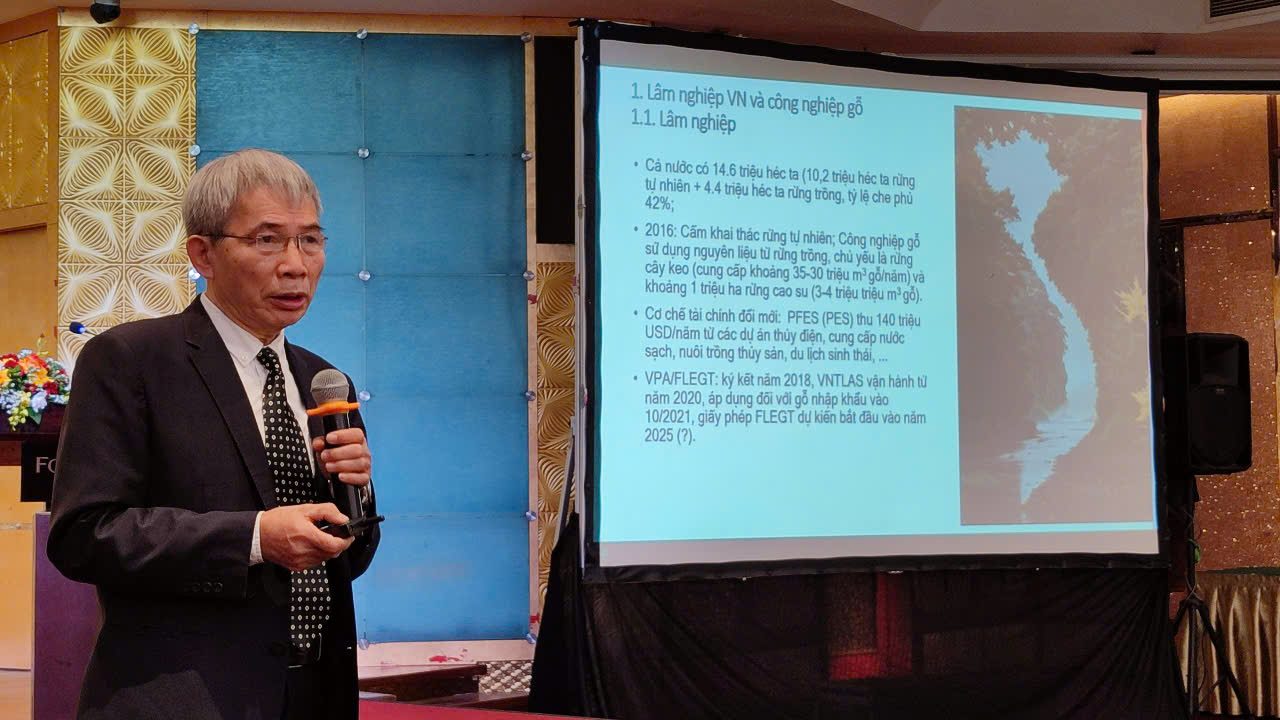
Mr. Ngô Sỹ Hoài, Vice Chairman and General Secretary of VIFOREST
have a presentation at the workshop. Source: Forest Trends
According to data from Forest Trends, China is currently the second-largest timber market for Vietnam after the United States, accounting for about 60% of Vietnam's wood chip export turnover (equivalent to 2 billion USD in 2023). The main export products include wood chips, plywood, and veneer, which serve as key raw materials in China's wood processing industry.
In the opposite direction, Vietnam imports about 1 billion USD worth of timber annually from China, mostly veneer sourced from Russia (poplar wood) and other wood products. However, this dependency presents a significant challenge, as these imported products sometimes fail to meet the standards encouraged by international markets such as the United States and the European Union.
The correlation between timber exports and imports between Vietnam and China clearly reflects mutual dependence: Vietnam supplies raw materials for China's processing factories, while China provides processed wood products to meet domestic demand and support Vietnam's exports. However, this relationship needs to be managed sustainably to avoid risks related to timber origin and ensure compliance with international regulations on legal timber trade.

The delegates discussed and shared their opinions. Source: Forest Trends.
Mr. Trương Lịch Yến, a representative of CNFPIA, stated that there is still a shortage of high-quality products in China. The supply capacity for products does not align with the growing diversity of market demands, while there is an oversupply of lower-quality products. Some products face significant standardization issues, and outdated production capacities in traditional industries still make up a large proportion. As a result, China's reliance on imported timber remains high.
Efforts for sustainable development
Both China and Vietnam are implementing initiatives to promote legal timber supply chains and protect forest resources. China's InFit project is an example, focusing on sustainable trade investment, minimizing environmental impacts, and establishing an effective timber traceability system. China has introduced stringent regulations to reduce risks in international timber trade while supporting businesses in improving their production processes to ensure compliance with international standards.
In Vietnam, policies promoting sustainable forest certification, such as FSC and PEFC, are being strengthened to ensure transparency in the supply chain. The government is also collaborating with international organizations to implement modern traceability technology, enabling comprehensive monitoring from harvesting and transportation to consumption. Additionally, training programs and capacity-building initiatives for businesses and local communities play a crucial role in establishing a legal and sustainable timber trade foundation.
Both countries are also discussing cooperation in developing low-emission and energy-efficient wood processing technologies, aiming to reduce environmental pollution in the timber industry. These efforts not only bring economic benefits but also help enhance the image of timber trade for both nations in international markets.
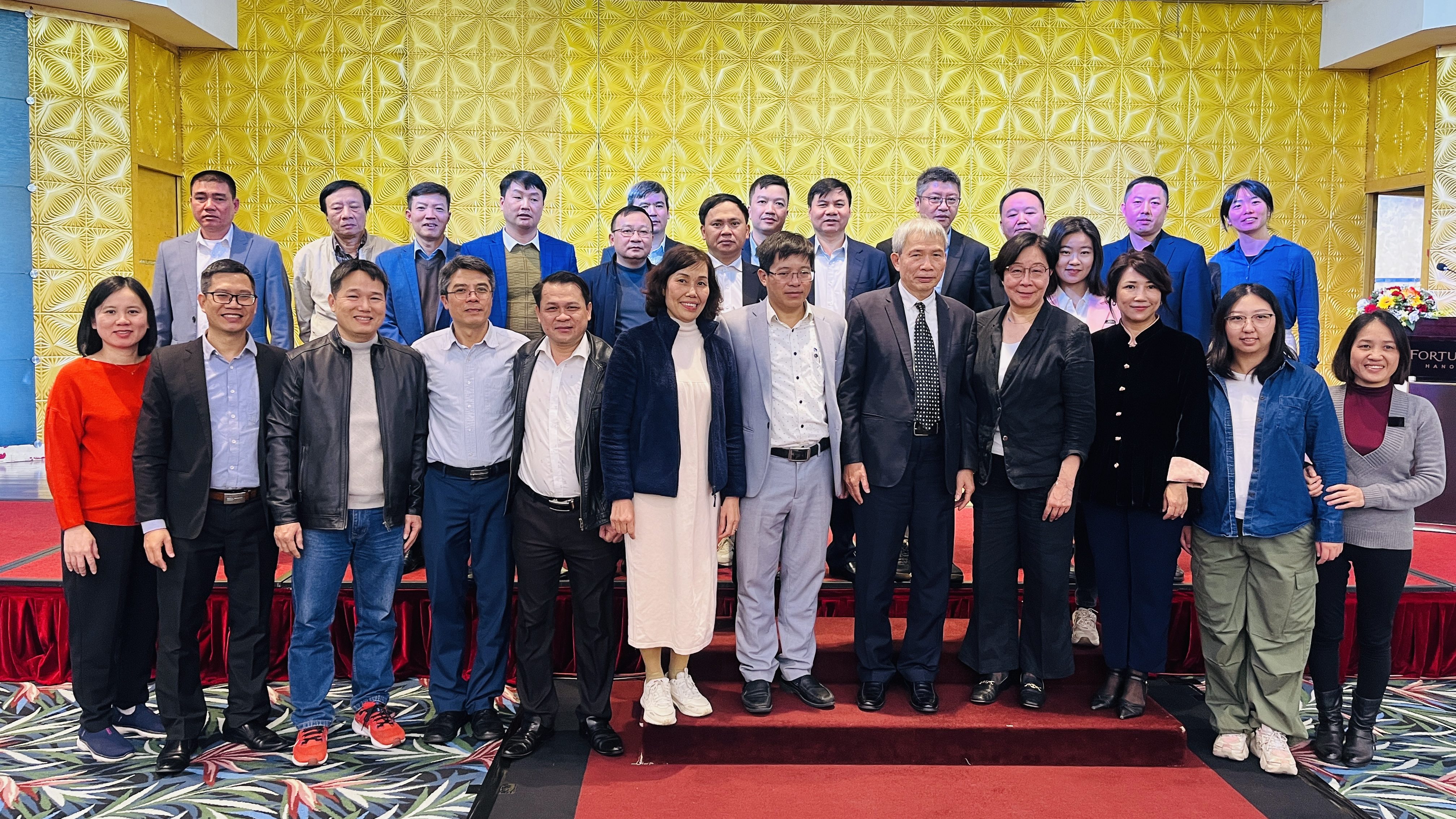
The delegates attending the roundtable discussion. Source: Forest Trends.
Conclusion
The roundtable discussion is an opportunity for stakeholders to share experiences and challenges in timber trade, thereby proposing solutions to improve economic efficiency and environmental protection. The strong cooperation between Vietnam and China not only contributes to economic development but also promotes the achievement of global sustainability goals.
Please review webinar documents at the link and watch the full webinar recording below:
If you have any questions or feedback, please do not hesitate to contact us at: hathuckpt@gmail.com
No thoughts shared yet. Be the first to share your thoughts!