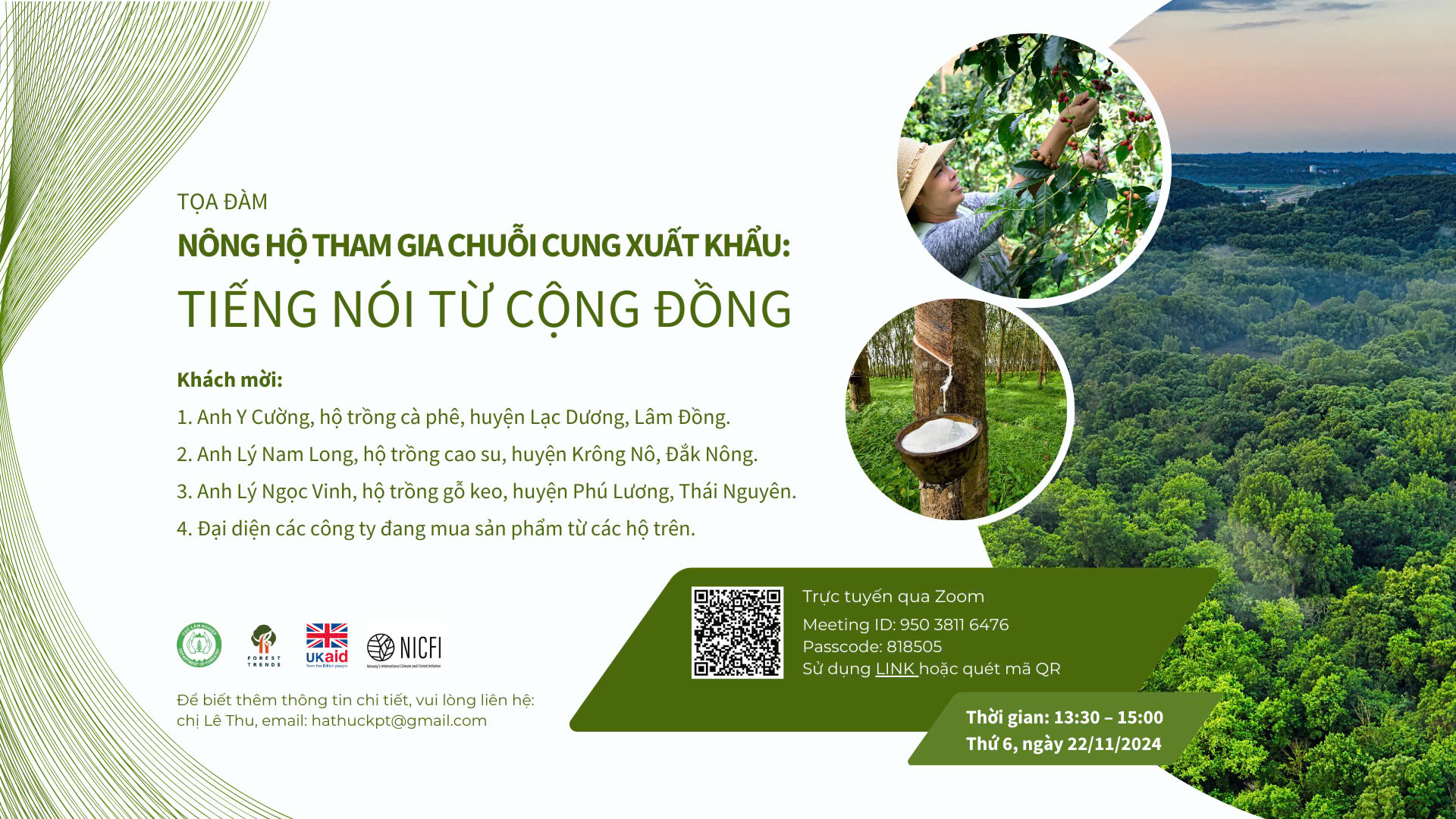
As part of the seminar series organized by the EUDR – Forestry Network, a webinar titled "Smallholders in Export Supply Chains – Voices from the Community" was held on the afternoon of November 22, 2024. The event featured notable participants, including Mr. Y Cuong, a coffee farmer from Lac Duong, Lam Dong; Mr. Ly Nam Long, a rubber farmer from Krong No, Dak Nong; Mr. Ly Ngoc Vinh, an acacia wood farmer from Phu Luong, Thai Nguyen; as well as companies currently sourcing products from these households.
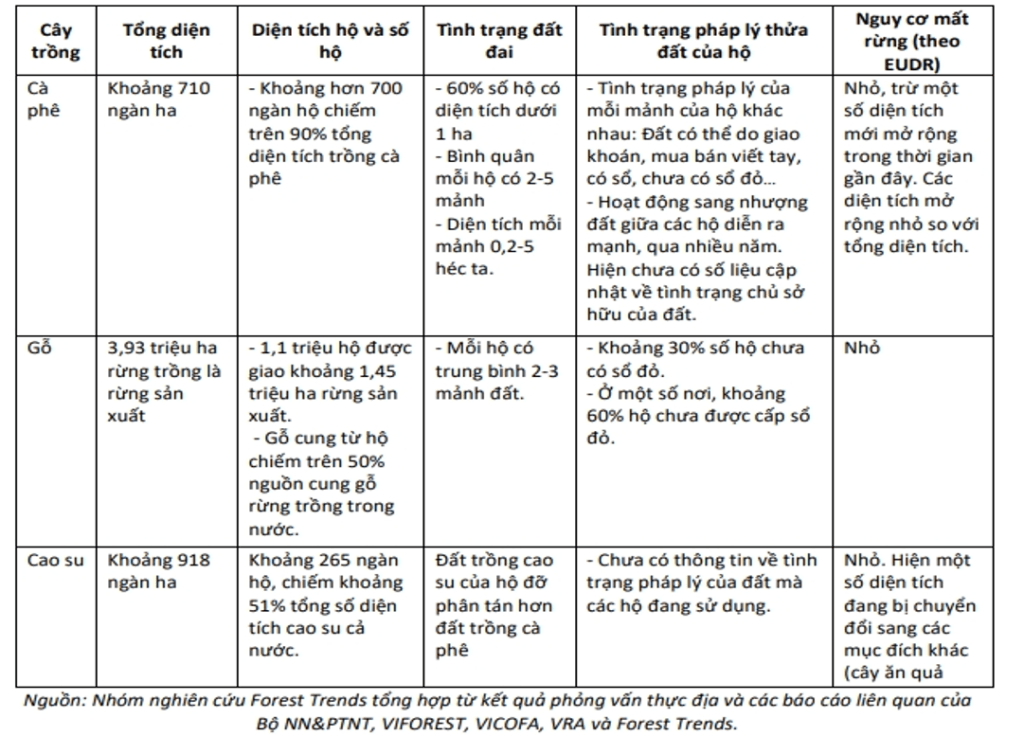
Image 1: Smallholder participating in the supply chains of coffee, timber, and rubber industries.
During various domestic and international discussions, experts, managers, and businesses frequently express concerns about the challenges smallholder producers face in adapting to the European Union Deforestation Regulation (EUDR). In Vietnam, smallholders play a pivotal role in the supply chains of coffee, rubber, and timber industries. According to official data, approximately 1.1 million households nationwide manage around 1.45 million hectares of production forest, contributing over 50% of plantation timber. Smallholder coffee farms account for 90% of the total coffee plantation area, while smallholder rubber plantations constitute 51% of the country's total rubber acreage. Despite their significant contributions, smallholder forest, coffee, and rubber farmers encounter numerous challenges in meeting EUDR requirements.
Land legality
Smallholder representatives highlighted difficulties in proving the legal status of their land use rights. Much of their farmland was reclaimed and handed down through generations, often without land use certificates issued by local authorities. To protect their rights, smallholders at the forum urged regulatory agencies and local governments to expedite the issuance of land use certificates for households with long-term, legitimate, and dispute-free land use.
Challenges in traceability
Most smallholders depend on intermediaries and brokers to sell their products, which diminishes their competitiveness, complicates supply chain structures, and increases traceability challenges.
For forest farmers, forestland is often reclaimed or allocated through land and forest distribution programs. Due to historical circumstances, these plantations tend to be non-contiguous, fragmented, and small, with some plots as tiny as 0.1 hectares—below the EUDR’s minimum threshold for defining a forest. Similarly, coffee and rubber smallholder plots are also small, fragmented, and scattered, making traceability and large-scale farming models difficult to implement.
Role of associations, cooperatives, and smallholder groups
Cooperatives and smallholder groups play a vital role in improving farmers' access to information and markets, thereby streamlining supply chains. Farmers at the forum shared their experiences with cooperatives, emphasizing their importance in bridging the gap between smallholders and markets, providing pricing and market information, and facilitating direct connections with trading and production companies. With the support of cooperatives and groups, smallholders can achieve better prices for their materials. These organizations also assist in securing legal support from regulatory agencies and local governments.
Moving forward, associations such as the Vietnam Coffee-Cocoa Association, Association of Vietnam Timber and Forest Products, and the Rubber Association, along with large enterprises, should redefine the role of smallholders within their respective supply chains and sustainable business models. Smallholders should be regarded not merely as product suppliers but as long-term partners contributing to the sustainable development of businesses and industries.
The full recording of the event can be viewed in the video below.
If you have any questions or feedback, please do not hesitate to contact us at: hathuckpt@gmail.com
No thoughts shared yet. Be the first to share your thoughts!