Hanoi, October 3, 2024 – The Department of Forestry, in collaboration with the Vietnam Agricultural Economics and Rural Development Association, organized a workshop “Forest Carbon – New Financing Opportunities for Forest Protection and Development”, with sponsorship from Forest Trends and UK PACT.
The workshop brought together over 140 in-person participants, including representatives from the Department of Forestry, various departments under the Ministry, and key stakeholders such as officials from other ministries, the National Assembly Committee on Science, Technology, and Environment, the Central Economic Commission, and delegates from five provincial Departments of Agriculture and Rural Development. Also in attendance were representatives from diplomatic missions, international organizations, research institutions, businesses, experts, and media outlets. Furthermore, the event attracted 300 online participants, including representatives from provincial Departments of Agriculture and Rural Development, Forest Protection Sub-Departments, Forest Protection and Development Funds, and management boards of special-use forests across multiple provinces.
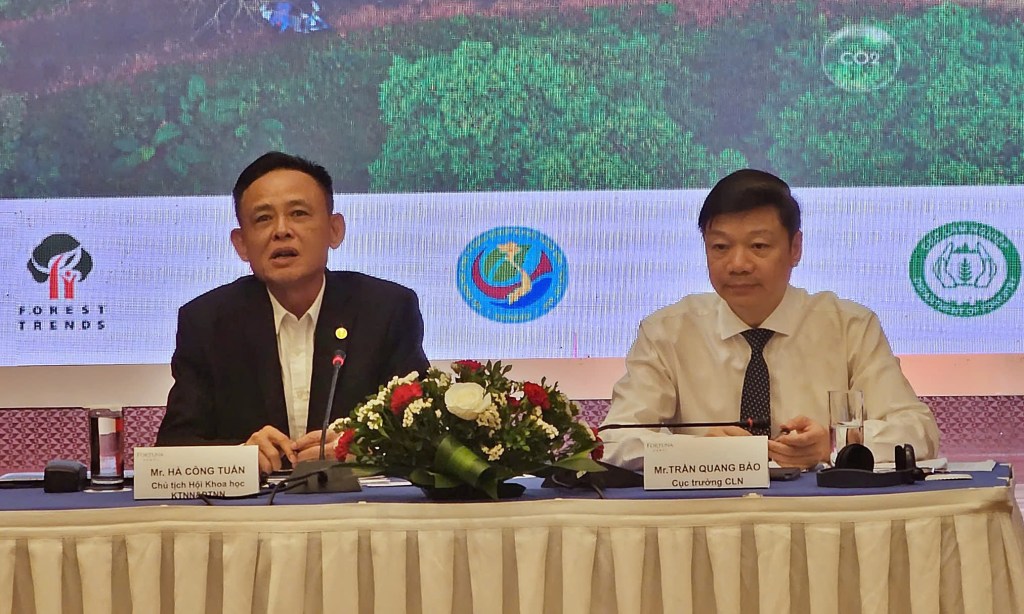
Dr. Hà Công Tuấn, Former Deputy Minister of the Ministry of Agriculture and Rural Development, Chairman of the Vietnam Society of Agricultural Economics and Rural Development, and Mr. Trần Quang Bảo, Director of the Department of Forestry, jointly chaired the workshop..
This workshop aimed to share international experiences on carbon markets, policies for managing carbon credits, and the development of domestic carbon markets. It also focused on discussing the current status and potential of forest carbon, identifying opportunities and challenges that Vietnam faces in developing its forest carbon market. The event sought to propose solutions and provide strategic directions for the sustainable development of this emerging market.
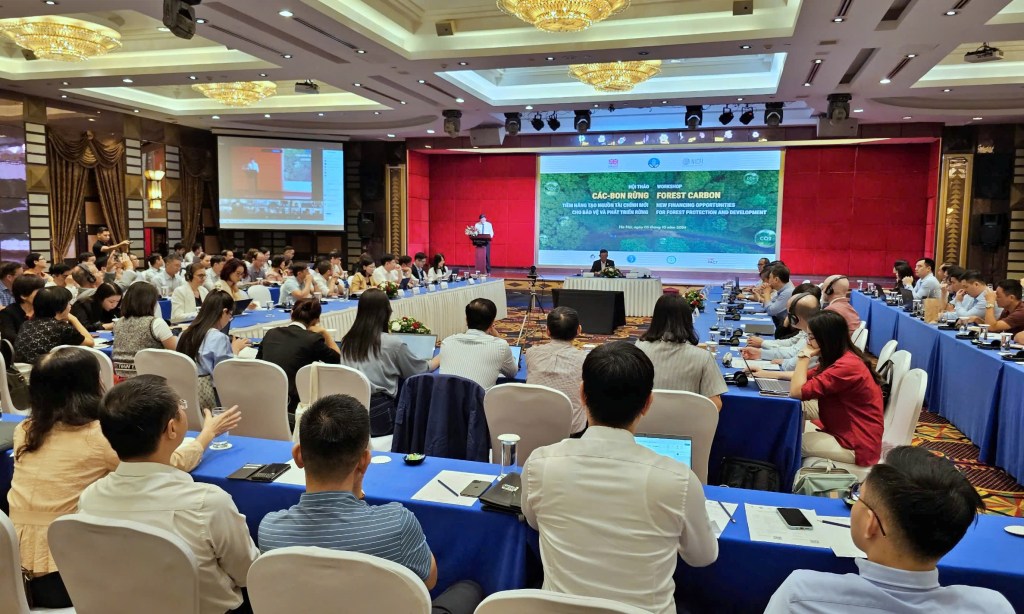
The overview of the workshop
According to Mr. Trần Quang Bảo, Director General of the Department of Forestry, Ministry of Agriculture and Rural Development (MARD), the carbon market has the potential to generate hundreds of millions of USD annually for Vietnam. As a member of the United Nations Framework Convention on Climate Change (UNFCCC) and the Paris Agreement, Vietnam has demonstrated strong commitments to reducing greenhouse gas emissions. Notably, at COP26 in 2021, Vietnam pledged to achieve net-zero emissions by 2050. This ambitious commitment opens up new opportunities for the forestry sector to establish and operate financial mechanisms that mobilize both international and domestic resources, particularly through the development of markets and the promotion of forest carbon credit trading.
Vietnam is currently implementing a single program for transferring forest carbon credits and emission reduction outcomes through the Emission Reductions Payment Agreement (ERPA) for six provinces in the North Central region with the World Bank. This program successfully transferred 10.3 million tons of CO2 and received $51.5 million during the 2018–2019 period. At present, the MARD is finalizing the necessary documents to submit to the Prime Minister for consideration and approval to negotiate and sign an emission reduction purchase agreement for 11 provinces in the Central Highlands and South-Central region with the Emergent Forest Finance Accelerator
Vietnam has also established a legal policy framework to shape its carbon market, including the Forestry Law and the Environmental Protection Law. However, there remains a significant gap between these laws and the sub-law implementation guidelines. This necessitates continued efforts by the MARD and the Ministry of Natural Resources and Environment (MONRE) to develop sub-law documents to effectively establish a domestic carbon market by 2028.
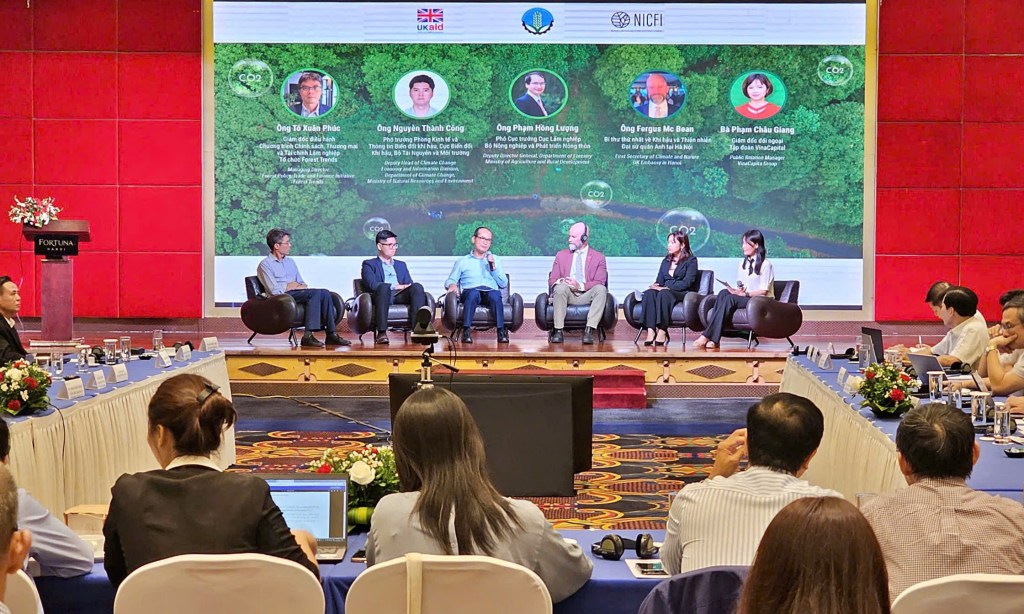
Speakers participating in the in-depth discussion session at the workshop.
Forestry is currently the only sector capable of achieving net-negative emissions, thanks to the efforts in forest protection and development by the entire political system and the support of international partners. However, Vietnam's forest carbon market is still in its early stages and faces numerous difficulties and challenges.
According to former Deputy Minister Hà Công Tuấn, thanks to the policy of closing natural forests since 2017 and efforts in forest regeneration and natural forest restoration, the forestry sector contributes approximately 56–57 million tons of carbon annually. However, the potential for increasing carbon emission reductions from forests is limited, mainly depending on improving forest quality. Calculations show that carbon sequestration capacity varies by forest type: rich evergreen forests store 143 tons per hectare per year, medium-quality forests store 63 tons, poor forests about 32 tons, and plantation forests over 27 tons per hectare annually.
During the workshop, experts and delegates emphasized the urgent need to establish systems and policy tools for developing Vietnam’s carbon market. Discussions also focused on benefit-sharing mechanisms for carbon credits and supportive measures for small-scale and vulnerable forest owners.
Please access the workshop materials at link and the full record of the workshop via the video below: https://drive.google.com/file/d/1pV6RMujAgOLpSzDF3fDvzml3uNMjEe58/view?usp=drive_link
No thoughts shared yet. Be the first to share your thoughts!